

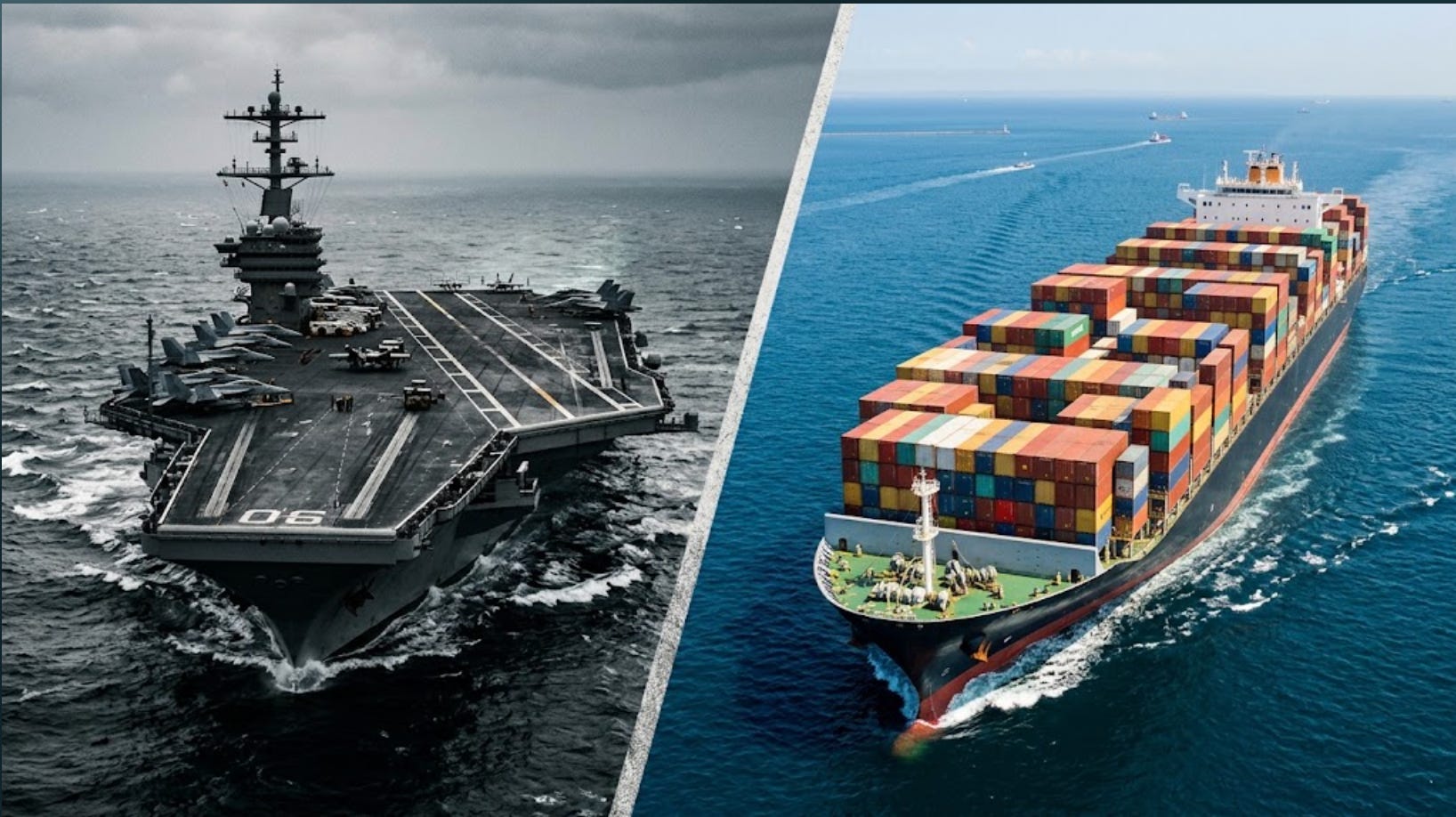
Nations have two broad ways to build power.
Throughout history, empires and nations gained power through coercion, conquering and controlling territory. The Mongol Empire became rich by sending armies across Asia; Rome’s wealth came from armies invading Europe and North Africa; the British Empire and its wealth came from armies conquering and colonizing 1/4 of the world. (OpenStax, Mongols, 2023.; OpenStax, Rome, 2023.; National Army Museum.; Britannica, 1902.)
These empires also traded, but they were built and maintained primarily by force. Those targeted for invasion fought back, fought for independence while occupied, and pursued independence when the conqueror could no longer control them.
There is another way. Trade and cooperation. China’s Song dynasty opened its ports to foreigners and became wealthy through trade. Trade that did not require armies to take and control territory. (Columbia University; Chen, 2025.)
In India, Calicut grew rich from spice trading. Its rulers collected income from merchants connecting the port to markets. Calicut did not need to occupy and control its overseas trading partners. (Sen.; Kerala Tourism.)
Along Africa’s Swahili coast, cities such as Kilwa grew wealthy by connecting African goods with markets in Arabia, India, and China. (UNESCO.)
These states and trading cities also fought and conquered, but they were built and maintained primarily through trade. Those targeted for trade traded willingly, and they also prospered.
Conquest and control use invasion, military threats, coups, economic pressure, and other means to compel compliance.
Trade and cooperation use trade, investment, and agreements that give both sides reasons to participate.
Every major power combines these approaches. The balance between them shapes how other countries work with them. Whether they seek closer relationships, reduce their dependence, or prepare to defend themselves.
After World War II, the world changed. Trade and cooperation became the norm because international rules and institutions let countries build wealth and power through trade and cooperation. (WTO.; World Bank, 2020.)
World trade grew roughly forty-fivefold between 1950 and 2025 (WTO), and wars between countries fell significantly. The benefits of trade were uneven, and participation did not guarantee prosperity, but it shifted the world away from coercion toward cooperation and, overall, made the world richer. (World Bank, 2020.; World Bank, 2021.)
To facilitate this, many nations committed to Universalism (Trompenaars), where rules apply equally (more or less) to all nations, and every nation generally follows them. It was not perfect. The United States did not always follow the rules, and the Soviet Union combined participation in international institutions with coercive control over its neighbors. (ICJ, 1986.; Office of the Historian.)
Europe is a concrete example. In 1950, the Schuman Declaration proposed combining French and German coal and steel production to make another war materially harder. Former enemies cooperated and followed the rules because institutions set binding rules and economic incentives for cooperation. The EU developed from that process. (Schuman Declaration, 1950.; European Commission, 2026.)
Wednesday’s Edion: The U.S. and how the Trump Republican regime has pivoted the U.S. from cooperation to coercion. (White House, July 2025.)
Friday’s Edition: Russia and how it never evolved past coercion.
Saturday’s Edition China and how it is keeping its general historical legacy of cooperation and what’s next for the world as Trump pivots to coercion, and Putin pushes forward with conquest and control, while Xi expands trade and cooperation.
Those decisions determine what happens next.
If you enjoyed this article, help support my work by becoming a paid subscriber or “Buy me a coffee.”
Get a solid understanding of Trompenaars’ cultural dimensions by purchasing the guide or subscribing to Cultural Perspective (free or paid) and receiving the guide for free.
