

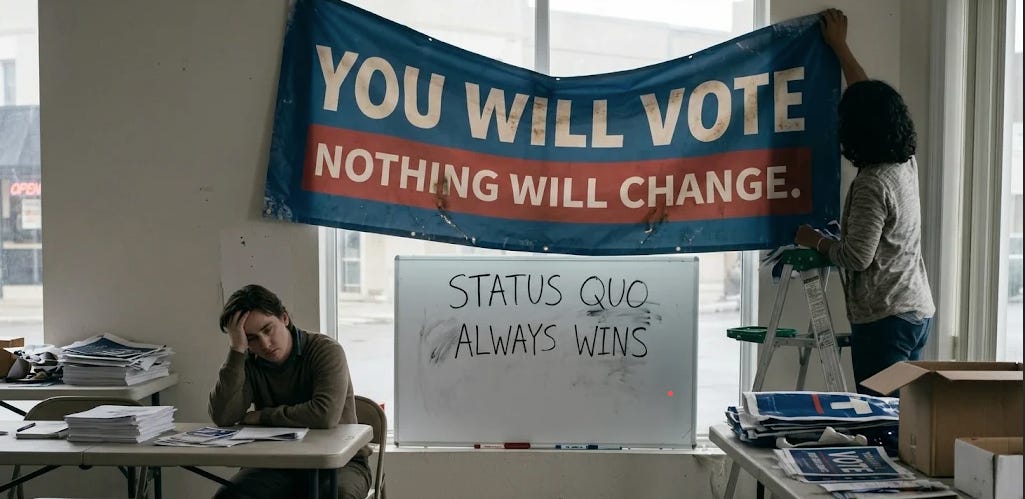
Affordable housing, lower bills, better healthcare: why won’t the government do anything?
Americans voted for change, but the American political system was deliberately designed to make change difficult.
On 3 November, Americans voted Republicans out of Congress and gave Democrats the power. But winning Congress does not mean Democrats can deliver the changes voters demanded.
Trump can veto the laws they pass. Republicans can use the Senate filibuster to block most legislation, and they will. Congressional leaders control which bills advance and which do not, and it appears Jeffries and Schumer (if he is elected Senate Majority Leader) have little interest in making changes.
These are not design flaws. The Constitution deliberately divides government power to prevent any one person or institution from controlling the country. It also prevents the changes voters want.
This is an important part of American culture: distrust of concentrated power. Americans established a government that limits the authority of political leaders to effect change.
This creates a conflict between two cultural values: Conservation and Openness to Change.
Conservation values stability, established rules, and the preservation of institutions.
Openness to Change values innovation, independence, and changing practices that no longer work.
The American system was built to preserve stability. But voters regularly elect politicians because they want something different.
This conflict has shaped American history.
Until 1913, Americans could not vote directly for their United States senators. State legislatures chose them.
That gave state legislatures control over their state Senators. Political corruption and disputes between state lawmakers sometimes left Senate seats vacant for months.
The people demanded direct elections.
The first proposals came to Congress in 1826. Nothing changed. During the 1890s, the House repeatedly approved resolutions calling for constitutional change, but the Senate refused because senators were being asked to change the system that gave them their positions.
It took decades of political pressure, corruption scandals, and organized reform before Congress approved the Seventeenth Amendment in 1912. The states ratified it in 1913. (National Archives) Americans finally got the change they wanted, but it took decades.
This is also a function of Power Distance, the difference between accepting authority and challenging it.
Reformers fought to take that power away from state legislatures and give it to voters.
The Power Distance issue remains an issue today:
Congressional leaders control much of what Congress votes on.
Committee chairs can prevent bills from advancing.
Party leaders influence which legislation receives a vote.
Senate rules allow opponents to delay or block action.
Progressive, Openness to change, Democrats will face these obstacles in January. But they will also control some committees and can publicly push for investigations, hearings, and the legislative agenda in Congress.
But even if the progressive lead the Democrats, they cannot quickly make the fundamental changes Americans want.
The Constitution limits what they can accomplish.
If you enjoyed this article, help support my work by becoming a paid subscriber or “Buy me a coffee.”
Get a solid understanding of Trompenaars’ cultural dimensions by purchasing the guide or subscribing to Cultural Perspective (free or paid) and receiving the guide for free.
