

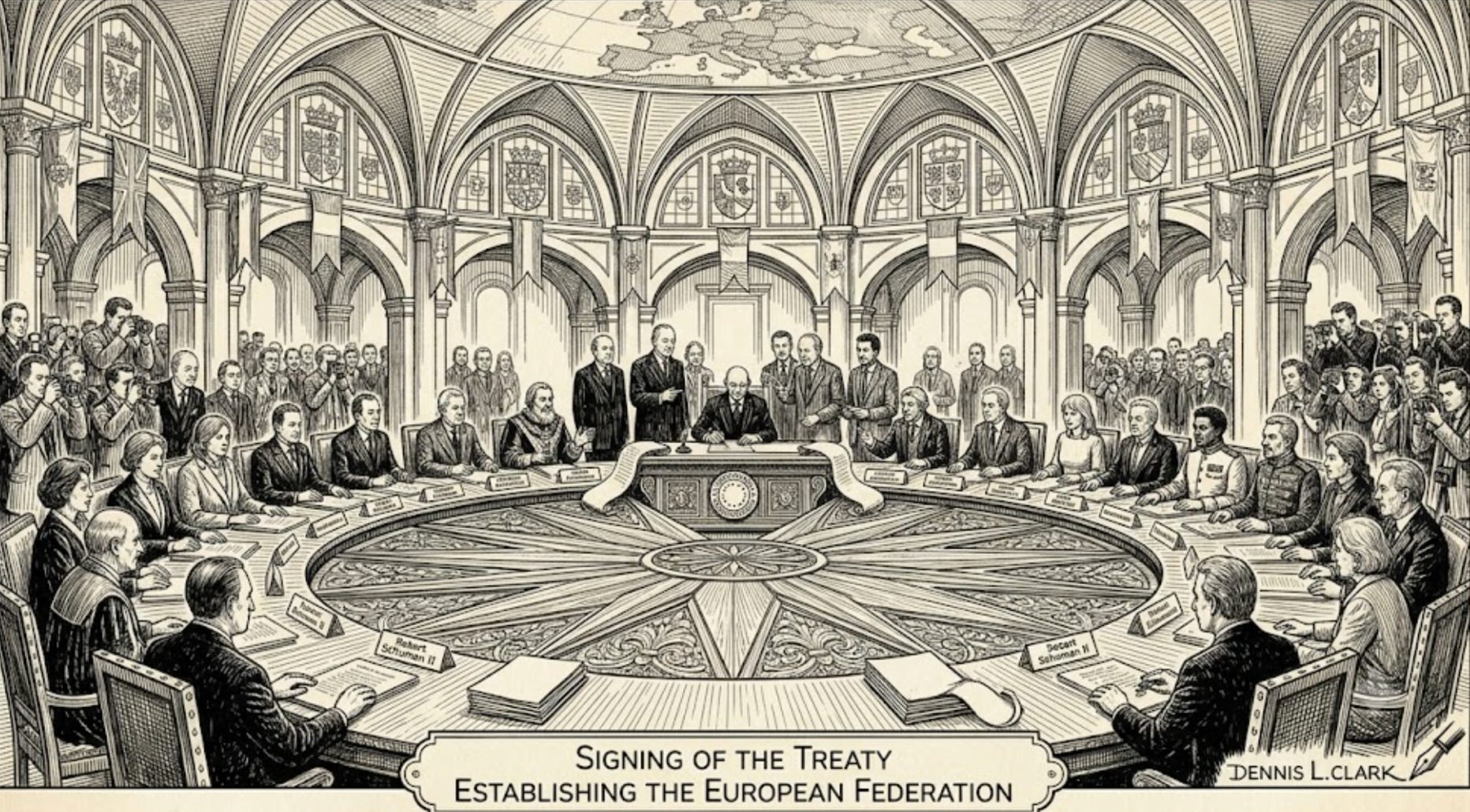
On March 2, 2026, at a French submarine base on the Atlantic coast, President Emmanuel Macron offered to protect Europe with nuclear its weapons. He called it forward deterrence, meaning stationing French nuclear aircraft in allied countries near Russia's border. Moscow knows before it attacks that the attack will be answered with nuclear weapons. He did this because the Trump-Republican administration made it clear that it may no longer help defend Europe. By June 2026, nine European countries had agreed to open talks with France. Europe had begun to build a second nuclear force, one that it controls.
Monday’s and Wednesday’s Editions traced how Europe reached this point. In 1648, the Peace of Westphalia granted each nation the right to self-rule. This created national loyalty, and that loyalty created rivalries, and those rivalries drove the wars that ended in World War II. The devastation of World War II drove Europe to integrate its economies to end rivalries and wars. But, it never joined its armies or its foreign policies, because the United States defended it and steered its foreign policy. Now the United States is pulling back from Europe. These two issues are pressuring the EU to either form a federation or break apart.
One block pushes to unite, caused by fear when Russia invaded Ukraine, and with the Trump-Republican administration cutting the number of troops in Europe and refusing to promise to defend Europe. In February 2026, a senior American defense official said Europe must take primary responsibility for defending itself. For the first time since 1945, Europeans face a Russian army with no guarantee that the United States will fight with them. That fear is strong enough to push sovereign nations to act together. Readiness 2030 is an €800 billion plan to rebuild Europe’s militaries, with nations buying weapons together rather than separately, and Macron’s forward-deterrence nuclear offer.
On the other side, some nations want greater independence from the EU. They feel
