

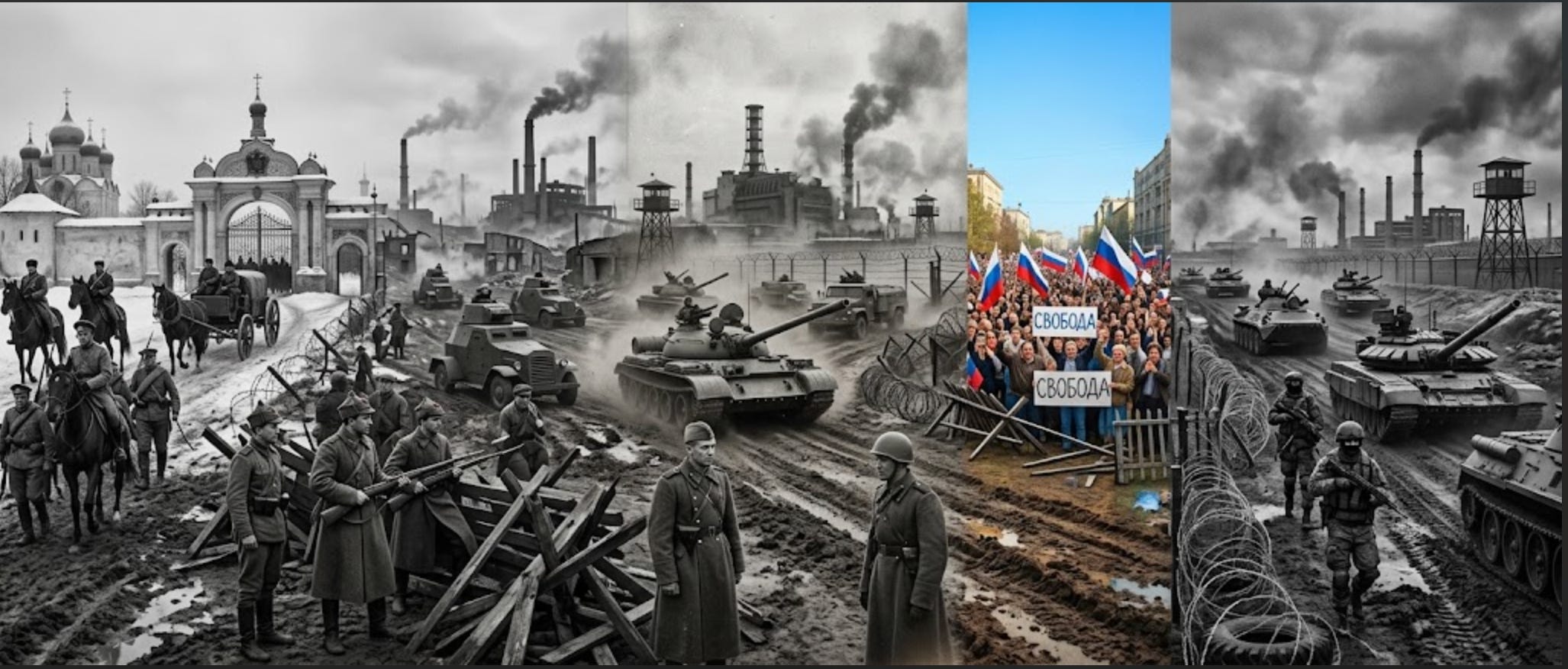
Like most nations in the past, Russia’s leaders have relied heavily on military force to control neighboring countries. Russia never evolved past that. It is the only great power that has not embraced the cooperative mindset. Only briefly, beginning in 1985 under Gorbachev and Yeltsin, did Russia move toward cooperation and prosperity. Putin brought Russia back to its aggressive roots, attacking Georgia in 2008 (Medvedev was technically president), seizing Crimea in 2014, and launching a full-scale invasion of Ukraine in 2022 (NATO).
In the post WWII age of cooperation and prosperity, the Soviet Union sent troops into Hungary in 1956 and Czechoslovakia in 1968 to crush political challenges to Moscow’s control. The Soviet Union used force to occupy or control Eastern Europe and Central Asia.
Today, Putin demands political and territorial concessions from neighboring countries and uses military force to impose his demands (CSIS).
The nations Russia bullies and invades pay a price, but so does Russia. It pays in two ways:
Directly, through war financing, the cost of occupation, destruction from attacks, and penalties other nations impose, such as sanctions and trade bans (SIPRI; European Commission).
Indirectly, through the revenue it loses by not trading peacefully (Council of the EU).
Three cultural theories help explain Russia’s longstanding reliance on coercion to control neighboring countries and impose its demands.
