

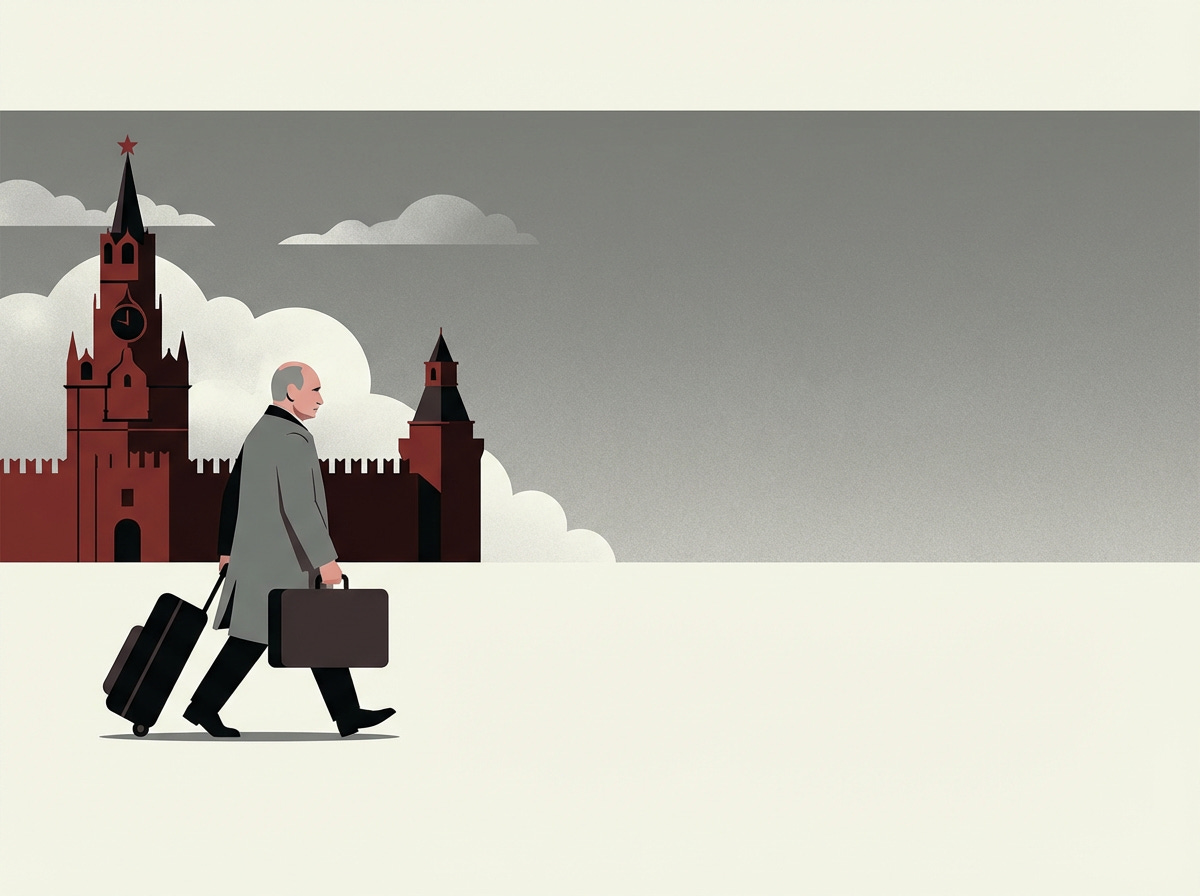
Will Putin survive as the Russian President through the end of the year? The crowd, as measured by Polymarket, says he will remain, with only about a 10% chance of leaving, being removed, or dying by the end of the year.
The Cultural Dimensions
Seven cultural dimensions across Hofstede, Trompenaars, Hall, and Schwartz all agree with each other.
Russia is a high power distance and high uncertainty avoidance culture. This means vertical authority is accepted. Chaos is feared more than bad leadership. It is also long-term-oriented and restrained; thus, short-term military and economic pain is accepted. For Russians, duty is more important than personal desires.
Russia is an ascription culture, meaning status comes by rank or who you are, and Putin holds tsar-like authority. Russia is externally directed, so problems are blamed on the West or on fate rather than on Putin.
Russia is high on Schwartz’s conservation cluster, which includes security, tradition, and conformity. This means under threat, the default is to rally around Mother Russia, its leader, and hold the line.
The Historical Patterns
Ibn Khaldun, in the Muqaddimah (1377), said that an external threat is required to unite a people. Putin has created that outside threat in NATO and the Ukraine war. He has united the Russian people, for now. That unity may be waning. Jack Goldstone, in his 1991 book Revolution and Rebellion in the Early Modern World, says states fall apart when the government runs out of money, the ruling class fights itself, and the public organizes. Russia is in serious financial trouble, the ruling class is divided, but the populace is kept from organizing. Paul Kennedy, in his 1987 book The Rise and Fall of the Great Powers, argues that empires fall when military costs outstrip the economy, which is the case now in Russia.
If you are enjoying this article, help support my work by becoming a paid subscriber or “buy me a coffee.”
The Archetypes
Putin is a Blue Guardian. His public appeal is to preserve Mother Russia through the reunification of historical Russian lands, the defense of Orthodox civilization, and the restoration of Russia to great-power status. Hornby’s Blue archetype leads through past felt experience, insists on customary ways, and punishes those who break the rules.
He is also a North Power-seeker. Personally ambitious, surrounds himself with those who agree with him, and pushes for expansion and growth. The Ukraine invasion is both a North Power-seeker expanding Russian power and the Blue Guardian bringing Ukraine back into the fold and pushing back against the West’s progressive agendas to maintain traditional society.
Other Factors
Four additional factors affect the odds of Putin surviving as President through the end of the year.
Age: Putin is 73, and a 73-year-old male with access to top medical care has roughly 2 to 3% annual mortality, which is about 1.3 to 2% over an eight month period. The war is at a near stalemate, and monthly casualties now outnumber new recruits. Putin is reluctant to call for general conscription because he fears the Russian people may rebel against it. As the war continues without success, the threat of internal division and his removal increases. The economy is under strain: inflation is high; a labor shortage from war casualties, mobilization, and emigration has pushed some major manufacturers to four-day workweeks; the deficit is growing; and growth is slowing to near 1%. Russia is now in a war economy. Public opinion is weakening: Levada's approval for Putin fell from 84% in January to 67.8% in the first week of April. It is likely much lower because respondents underreport disapproval for fear of reprisal.
