

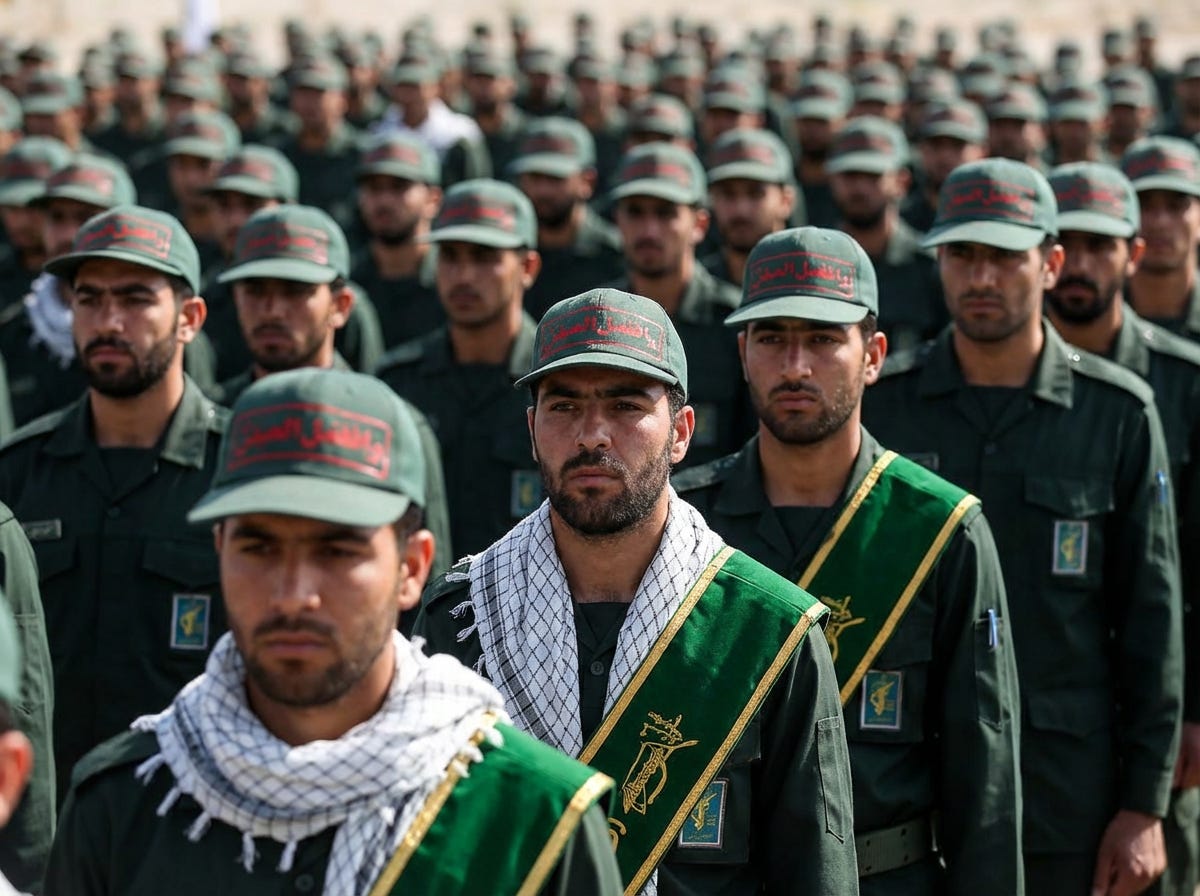
The wisdom of crowds gives Iran’s regime an 80% chance of surviving through 2026. That's what Polymarket traders are betting on. The crowd may be right in the short term, but the crowd is not looking at what history and culture say about what comes next.
The Historical Patterns
Seven hundred years ago, the Islamic historian Ibn Khaldun identified a global pattern he called asabiyyah, group cohesion. A tightly bonded group seizes power and controls a nation. In Iran, that was the 1979 Islamic Revolution. That bond is strongest when the group faces a common external enemy, which was the United States. Over a few generations, comfort and infighting erode that bond. The group loses the collective spirit that brought it to power, and a more cohesive challenger emerges to replace it.
Iran’s revolutionary generation is aging out. That original bond is gone. Iranian-American analyst Karim Sadjadpour claims that Iran’s leadership avoids normalizing relations with the West because it is the external threat holding the nation together.
Peter Turchin's research tells us that every society has a limited number of positions at the top. When a society produces more ambitious, educated people than there are positions of power to give them, those people become a threat to the system. They have the skills, the ambition, and the education to lead, but there’s no position for them. Iran has a massive, educated, urban youth population that is permanently locked out of power. Those are conditions for instability waiting for a trigger.
Joseph Tainter's complexity theory explains what is happening inside Iran's government. Every round of sanctions forces the regime to build workarounds. Every protest requires more security. Every economic crisis requires more bureaucracy. Each of these costs money, people, and attention. The regime is now fighting a war, managing a collapsing currency, controlling a population that does not support it, and keeping an enormous military and police system running. Tainter's core finding is that regimes do not collapse because of one big event. They collapse because the cost of keeping everything running eventually becomes more than the system can afford.
The Current Situation
On February 28, 2026, the United States and Israel attacked Iran. Supreme Leader Ali Khamenei was killed in the first wave. Ali Larijani, the de facto leader after Khamenei, was killed on March 17.
Under IRGC pressure, the Assembly of Experts selected Khamenei’s son Mojtaba as the new Supreme Leader. He was not on his father’s shortlist of successors. He has limited religious credentials, and Iran's 1979 revolution was built on the rejection of monarchy and family rule. Yet, the IRGC has installed the former leader’s son.
The largest protests since the Revolution erupted in December 2025 across more than 200 cities, driven by the collapsing rial, inflation, and shortages. But when Trump and Netanyahu attacked, the nation united. Even opposition leader Reza Pahlavi told supporters to stop protesting. This is asabiyyah in action, an external enemy creating national unity. U.S. intelligence confirms that the regime is consolidating, not collapsing, while under attack. But while the protests have ended, the underlying conditions have not changed. Ironically, the danger for the regime comes when the war ends.
The Cultural Perspectives
Trompenaars’ External Control explains why the population endures rather than fights. The culture tells people to adapt and wait. This is the regime’s biggest cultural shield.
Hofstede’s Long-Term Orientation explains why the regime has lasted 47 years. The culture resists change and holds onto what exists. But it also means appointing Mojtaba, Khomaine’s son, as his successor may backfire. A tradition-bound culture severely punishes tradition-breakers, and the tradition, since the Revolution, has been against hereditary rule.
Schwartz’s Embeddedness → Autonomy explains the generational rift. The regime was built around a collectivist population. The younger generation defines itself more individually. They are less willing to endure personal hardship to maintain group harmony.
Iran's culture both supports and undermines the regime, but that support is waning with the younger generations.
