

Beijing wants Taiwan. That has never been in question. But the cost of taking it by force is too high for a leader whose cultural programming and political survival depend on control, not gambles.
The Geography
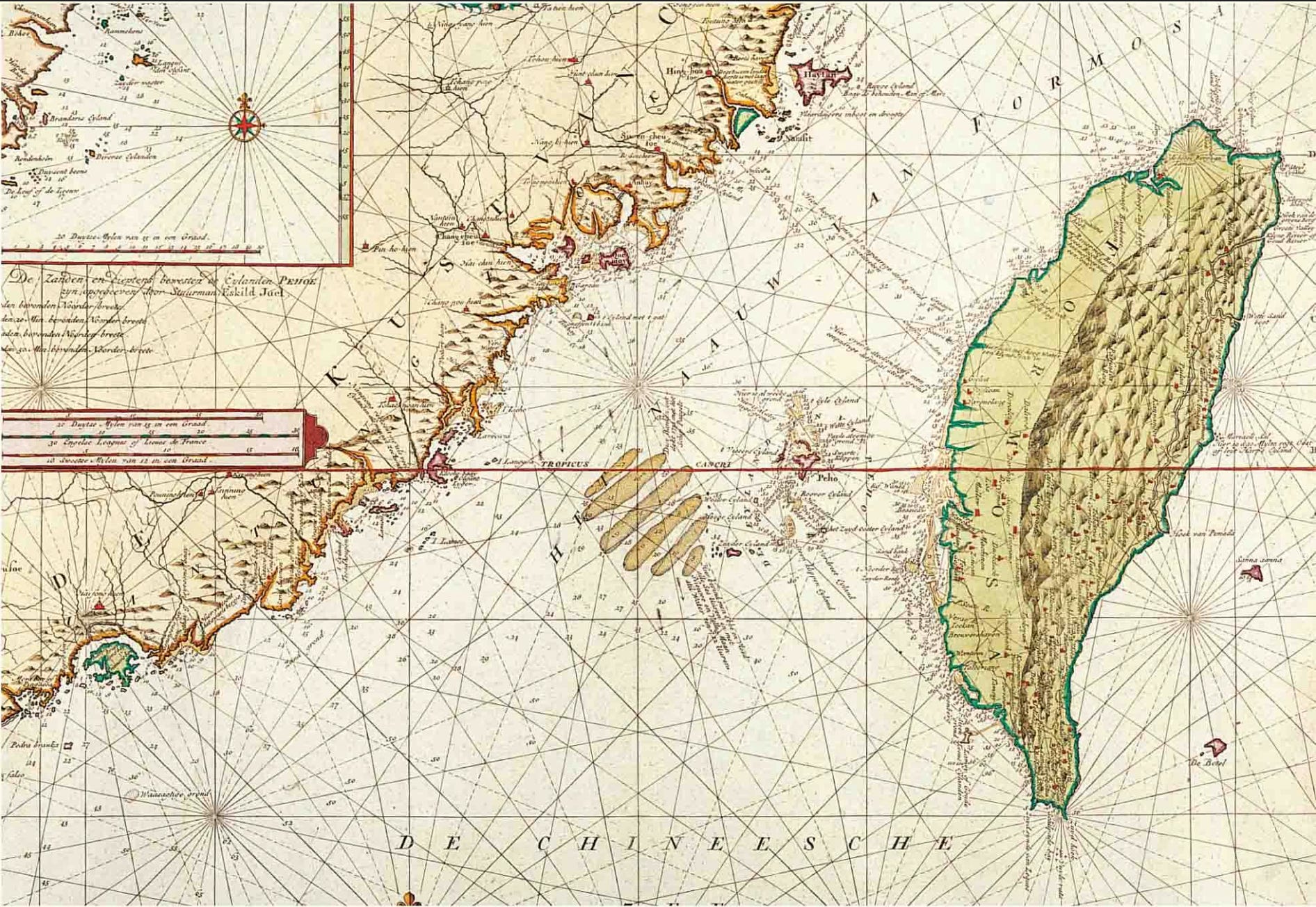
Taiwan sits roughly 130 kilometers across the Taiwan Strait from China. That sounds close, but it is a massive operational challenge. An amphibious assault across open water against a mountainous, fortified island is one of the hardest military operations there is. There are only 14 beaches on Taiwan’s western coast suitable for a landing force. Taiwan has spent decades fortifying them.
Tim Marshall’s framework from Prisoners of Geography applies directly here. Geography constrains military options. The Strait is shallow and weather-dependent, with a narrow operational window between April and October. Any invasion fleet would be exposed for hours in open water, visible to satellites and vulnerable to anti-ship missiles. Taiwan’s eastern coast is mountainous, essentially unlandable.
For comparison, the D-Day invasion at Normandy crossed roughly 160 kilometers of the English Channel. The Allies had total air superiority and the element of surprise. China would have none of these advantages. The mobilization of an invasion fleet requires weeks of visible buildup: troop movements, naval staging, aircraft repositioning. Taiwan, the United States, Japan, and every intelligence agency with satellite coverage would see it coming.
The Military
The PLA has a 2027 modernization deadline. But a deadline on paper and actual combat capability don’t always align.
Since 2022, Xi has purged over 100 senior PLA officers across every branch of the military. In January 2026, China’s top general Zhang Youxia and the chief of the Joint Staff Department Liu Zhenli were placed under investigation. A leader confident in his military does not gut its senior command structure months before a readiness deadline. Xi discovered that corruption hollowed out his command chain, and he is scrambling to rebuild it before 2027.
U.S. intelligence assessments released in early 2026 concluded that Beijing prefers to achieve unification without force and recognizes that an amphibious assault would carry a high risk of failure, especially if the United States intervenes. The PLA’s own war-gaming reportedly estimates over 100,000 troops killed in a direct assault.
If you are enjoying this article, help support my work by becoming a paid subscriber or “buy me a coffee.”
The Cultural Programming
Xi Jinping is a product of Chinese culture. He operates within what Schwartz identifies as high Embeddedness and Hierarchy values, and what Trompenaars calls a particularist, diffuse, ascription-based culture. What this means is that Xi was raised in a culture where the group matters more than the individual, you respect the chain of command, and who you know shapes what rules apply to you. Xi's power comes from his position inside the Communist Party. He did not earn it by winning battles or building a business. In Chinese political culture, relationships between officials are personal and long-term. And your rank comes from where the system places you, not from what you accomplished on your own. A leader who got his power this way does not gamble with it. The system gave him his authority. Threatening that system with a risky military operation that could fail would be threatening himself.
Through Hornby’s archetypes, Xi profiles as a North-Blue blend. The North drive seeks power and control. The Blue drive seeks to preserve tradition and order. This combination produces a leader who consolidates, purges rivals, and builds systems of loyalty. North-Blue leaders act when the outcome is near-certain. They do not roll the dice on operations with a significant chance of catastrophic failure.
The Economic Cost
China’s economy is slowing. In March 2026, Beijing set its GDP growth target below 5% for the first time. China’s population shrank by another 3.2 million people in the past year. Twenty-three percent of the population is over 60.
An invasion of Taiwan would have severe economic consequences. Estimates range from $2 to $3 trillion in direct economic losses from a limited conflict. China’s exports account for 20% of GDP. Western sanctions, even partial ones, would devastate an economy already under strain.
Taiwan produces over 90% of the world’s advanced semiconductors through TSMC. Any military operation that damages TSMC’s fabrication facilities does not give China control of advanced chip production. It destroys it. TSMC’s capabilities are not replicable at scale anywhere else, and the most advanced research and development remains in Taiwan despite TSMC’s expansion into the U.S. Invading Taiwan would be like burning down a house to steal the furniture.
The Historical Pattern
China is not expansionist in the same way Europe is. For most of its history, China operated as the center of civilization, the Middle Kingdom where other nations came to trade and to learn. China did not need to conquer the world. The world came to China.
But China does not see Taiwan as a foreign country. It sees Taiwan as a part of China that was taken away. China is not expanding into Taiwan; it’s taking back its territory, and that’s where the pattern comes in. Tibet was historically part of China. Beijing absorbed it in 1950. Hong Kong was taken by the British in the Opium Wars. Beijing waited, and it came back in 1997. Macau returned in 1999. Along the Russian border, China is slowly reclaiming influence over territories it lost in the 19th century. But it is not retaking these territories through military force; it is using economic integration, migration, infrastructure projects, and changing the names of places on official Chinese maps to their historical Mandarin names.
The pattern is that China reclaims lost territory through influence and patience. The last time China attacked a nation and held territory was Tibet in the 1950s, during the Mao era. China is not that nation today. Military force is the last option. China is pressuring Taiwan through economic dependence, military intimidation, diplomatic isolation, and grey-zone operations like simulated blockades and daily air incursions.
