

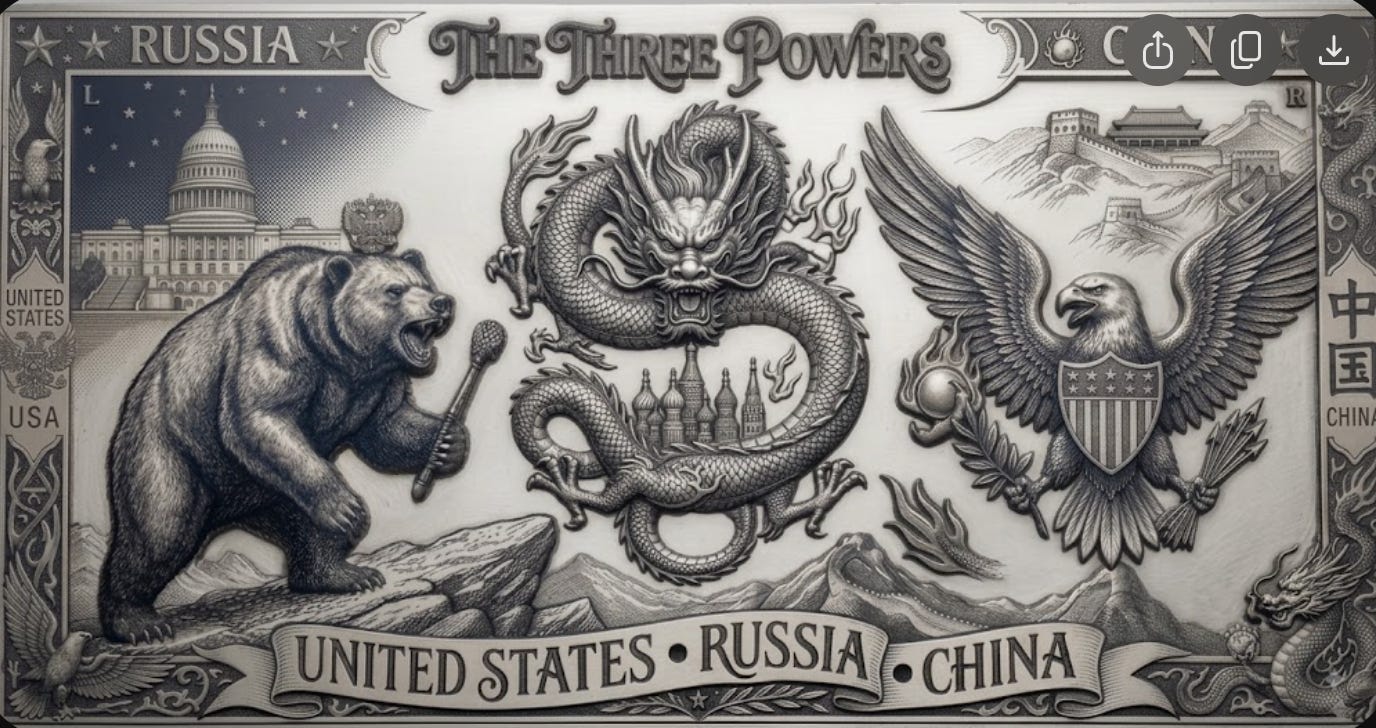
China’s behavior toward other nations runs on three cultural dimensions
Long-Term Orientation. On Hofstede’s scale, China scores 87, its highest dimension. China plans and builds in decades and centuries, not years, and is willing to wait.
A Hierarchy with China at the center, the Middle Kingdom. For most of its history, China ran its foreign relations through the tributary system: smaller states accepted China’s supriority and did not challenge it, and in return they gained access to trade with China and were left to run their own internal affairs. The old name for this order was tianxia, meaning all under heaven.
Guanxi (Particularism). China deals through relationships built on reciprocal obligation, where what governs is the relationship and the exchange of favors between two sides, not a set of equitable rules.
Monday’s Edition showed the United States built a system of equals: it applies its rules equally, it lets status be earned, and it places authority in its institutions, so other nations join by choice and stay. Wednesday’s Edition showed Russia built the opposite: the rules served Moscow, position was fixed, and uthority sat with the ruler. Members joined under the threat of force and left only when Moscow stopped using that force to keep them.
China is building neither. It is rebuilding the tributary system in modern form. Countries join by choice, for trade and investment, and they keep control of their governments. But they join a hierarchy with China at the center, not a partnership of equals. They defer to Beijing on the few things Beijing cares about most, and in return they get money and access. China’s cultural perspective builds this patiently, over decades. That is the third kind of system.
