Why South Korea Keeps Imprisoning Its Presidents
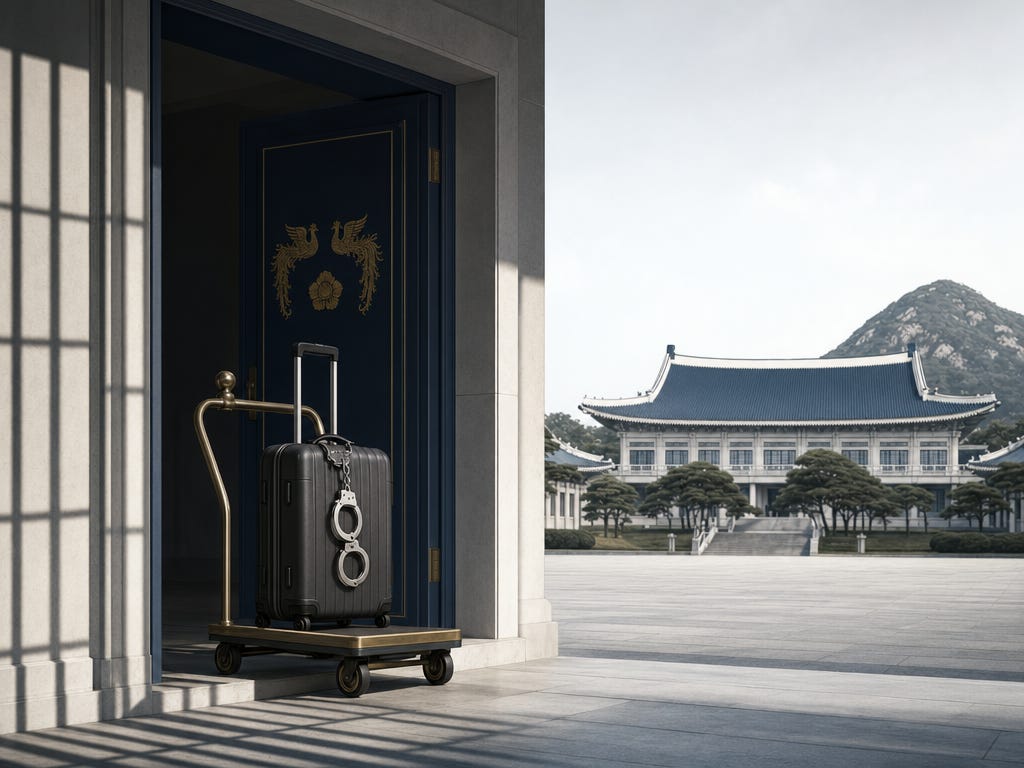
A Seoul appeals court on April 29 added seven years to former president Yoon Suk Yeol’s sentence. The new charges: resisting arrest and bypassing his Cabinet before declaring martial law in 2024. He is already serving life for rebellion. Every elected president since South Korea became a democracy in 1987 has been investigated, charged, or jailed. Western coverage tends to report this as failed politics, but it is the system following 600 years of Korean political culture.
The Historical patterns
Korea’s Joseon Dynasty (1392–1897) ran on factional politics in which the winning faction treated the losing one as criminals. JaHyun Kim Haboush, in The Confucian Kingship in Korea, and Bruce Cumings, in Korea’s Place in the Sun, trace this pattern straight into modern Korean politics. Each ruling faction treats the last one as a criminal, not as an opponent.
Park Chung-hee’s dictator-era presidency (1961–79) concentrated almost all power in the executive branch and weakened the checks on it, making it possible for the next leader to take revenge. The Korean Prosecutors’ Office was built with a level of autonomy that most democracies do not have. Prosecutors have investigated or charged every elected president since 1987. Political scientist Kang Won-Taek has mapped how Korea's regional split today between the conservative southeast (Yeongnam) and the progressive southwest (Honam) parallels Joseon-era factional politics. The right and the left take turns holding power, and they take turns prosecuting each other. The 600-year pattern of treating the losing party as criminals continues.
The Cultural dimensions
In Korea, the office and the person are inseparable. This is what Trompenaars calls a diffuse culture. The opposite of that is a specific culture where a person is separate from their work or position. In specific cultures, a leader can resign, and the matter ends. In Korea, removal from office is not enough, because the wrongdoing belongs to the person, not just the office.
Korea is also a collectivist culture (Hofstede), in which people see themselves as members of the group rather than as standalone individuals. This correlates closely with shame cultures (Benedict) in which social control comes from outside the person, what others see, say, and judge. In guilt cultures, social control comes from inside the person, conscience, personal sin, the feeling that what you did was wrong, even if no one ever finds out. Shame cultures require the group to punish wrongdoing, so a private settlement leaves the failure unresolved.
Korean civic life also prizes order and tradition, which Schwartz calls Conservation values. They demand that broken rules be enforced where everyone can see them.
The Archetypes
Yoon is a North Power-Seeker; idea-driven, charismatic, ambitious, and bends or breaks rules when it suits the goal. Yoon’s 2024 martial law order is a textbook North move at the extreme. He went around his Cabinet, gave himself the authority, and framed it as saving the country.
Korea’s civic and legal response is the Blue Guardian; rules-based, anchored in tradition, and built to punish rule-breakers. The Korean North archetypes leader pushes the limits, and Blue institutions punish them once they leave office, and the cycle repeats.
Other factors. South Korea's presidents serve a non-renewable five-year term. There is no re-election to restrain the president, and the next leader pays no price for putting them on trial. The right and left have switched power since 1997.
Expect the next South Korean president to face the same risk. Expect the cycle to keep running until the political class agrees to disarm itself, which is rare in any country. The Joseon-era pattern of treating losing factions as criminals, reinforced by Korean culture and archetypes, is still firmly entrenched.
If you enjoyed this article, help support my work by becoming a paid subscriber or “buy me a coffee.”


