WHO GETS TO BE ONE OF US? ETHNIC NATIONALISM. WEDNESDAY’S EDITION
Civic nationalism or ethnic nationalism - Series 13 #3
Tuesday examined civic nationalism, the system that grants belonging through legal compliance and participation. Today we examines its opposite: ethnic nationalism, the system that grants belonging through ancestry.
Ethnic nationalism operates through three cultural patterns: implicit communication, because everyone shares the same background. Group identity, because belonging comes from family, village, and nation rather than individual choice. Relationship-based rules because who you are determines which rules apply to you.
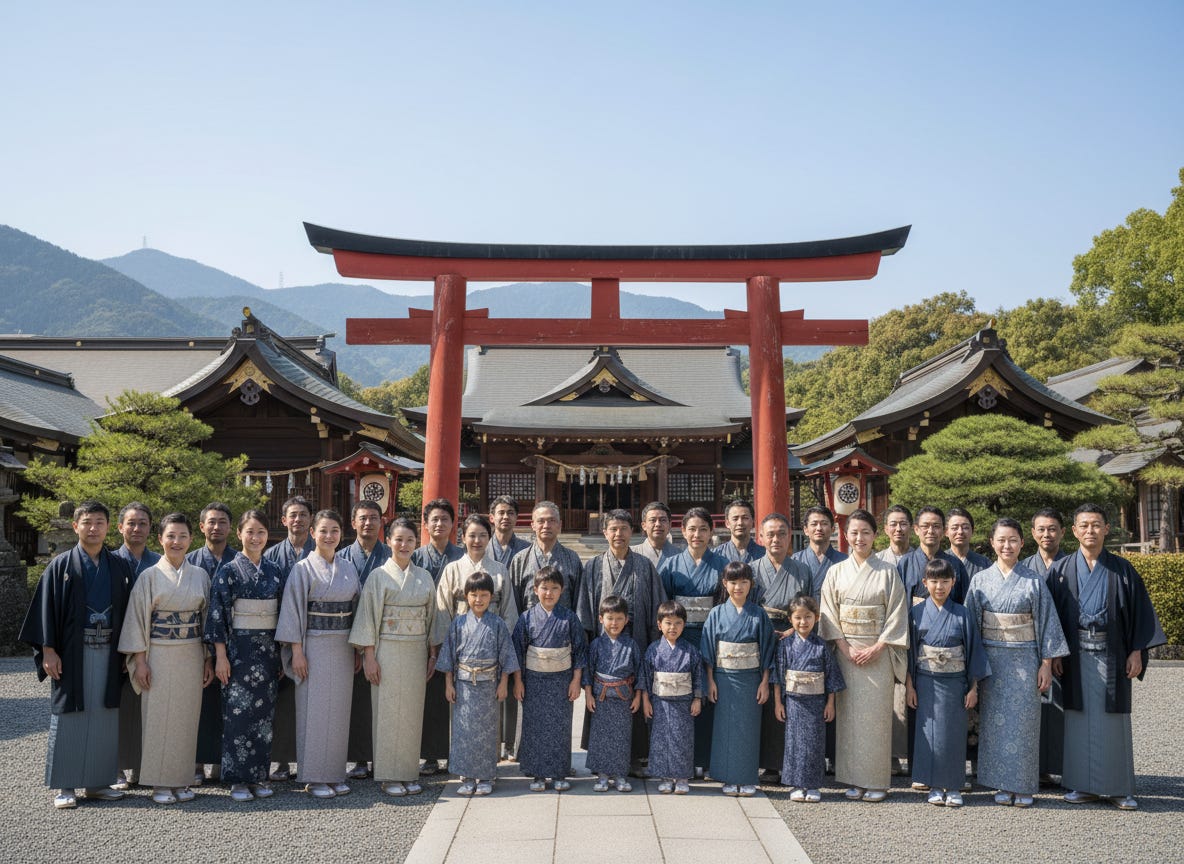
Japan shows how ethnic nationalism operates. A person born in Tokyo to Korean grandparents might speak only Japanese, attend Japanese schools, work at a Japanese company, and never leave the country, yet remain legally and socially Korean. Japan does not ask what your ideals are, if you speak the language, or if you want to be Japanese. Japan asks who your ancestors were. The system defines belonging through ethnicity, and three generations of living in Japan cannot change that. Japanese people communicate through shared assumptions, locate identity in the group, and apply different rules to insiders and outsiders. The Korean-Japanese person misses cues, lacks the right networks, and discovers that doors open for others stay closed for them.
Ethnic nationalism solves specific problems. It creates strong social cohesion because everyone shares the same background, speaks the same language, follows the same customs, and trusts the same networks. Crime rates stay low because social pressure enforces norms without police intervention. Economic coordination works smoothly because implicit agreements hold without detailed contracts. Japan has low crime, high social trust, clean public spaces, and efficient institutions precisely because the population shares common assumptions about behavior.
Hungary shows another problem that ethnic nationalism solves. After World War I, the Treaty of Trianon stripped Hungary of two-thirds of its territory and scattered Magyars across Romania, Slovakia, Serbia, and Ukraine. Ethnic nationalism kept Hungarian identity alive across political borders. Magyars in Romania still speak Hungarian, marry other Magyars, and orient toward Budapest rather than Bucharest. Ethnicity held the nation together when territory did not.
Ethnic nationalism also creates problems. It cannot absorb outsiders. Japan faces a demographic crisis: the population is aging, the birth rate is collapsing, and the economy needs workers. Immigration is the obvious solution, but ethnic nationalism makes integration nearly impossible. Foreign workers remain permanent outsiders regardless of how long they stay or how well they adapt, how much they love Japan. Their children remain outsiders. Their grandchildren remain outsiders.
Ethnic nationalism also fractures when borders don’t match populations. Yugoslavia held Serbs, Croats, Bosniaks, and Slovenes within one state. Each group defined belonging through ethnicity. When the central authority weakened in the 1990s, ethnic nationalism produced ethnic cleansing. If race determines who belongs, then people with the wrong race must leave.
From a cultural perspective, ethnic nationalism remains stable where populations stay homogeneous, and borders match ethnic boundaries. Japan works because 98% of the population shares the same ancestry. Hungary works because the state now contains mostly Magyars. These societies pay costs in demographic decline and inability to absorb talent from abroad, but they maintain strong cohesion and high social trust.
Hornby’s Blue Guardian archetype thrives under race nationalism. The Guardian insists on customary ways, draws authority from inner certainty about what is right, and imposes structure based on habits and traditions. Guardians support ethnic nationalism by enforcing order and that outsiders will not disrupt established ways, and that defending the group means defending the way “things have always been.” There is not debate whether ethnic nationalism is correct; Blue knows it as certainty and acts from that conviction.
Ethnic nationalism works where cultural patterns match institutional design: implicit communication, group identity, relationship-based rules, and homogeneous populations. It fails where populations mix, borders shift, or economies require outside talent.
Thursday: What causes societies to shift between civic and ethnic nationalism.
If you enjoyed this article, buy me a coffee!


The Japanese-Korean example brilliantly illustrates the inflexibility embedded in ethnic nationalism's logic. Three generations of cultural immersion become irrelevant when belonging is coded through ancestry rather than participation. Your analysis of the structural trade-offs is particularly sharp - Japan achieves remarkable social cohesion and trust precisely through mechanisms that prevent demographic adaptation. The demographic crisis becomes not just an economic problem but a test of whether cultural systems can evolve when foundational assumptions no longer serve survival. The connection to the Blue Guardian archetype adds psychological depth - showing how personality structures align with and reinforce institutional patterns.