WHO GETS TO BE ONE OF US? CIVIC NATIONALISM AND ETHNIC NATIONALISM. MONDAY'S EDITION
Civic nationalism or ethnic nationalism - Series 13 #1
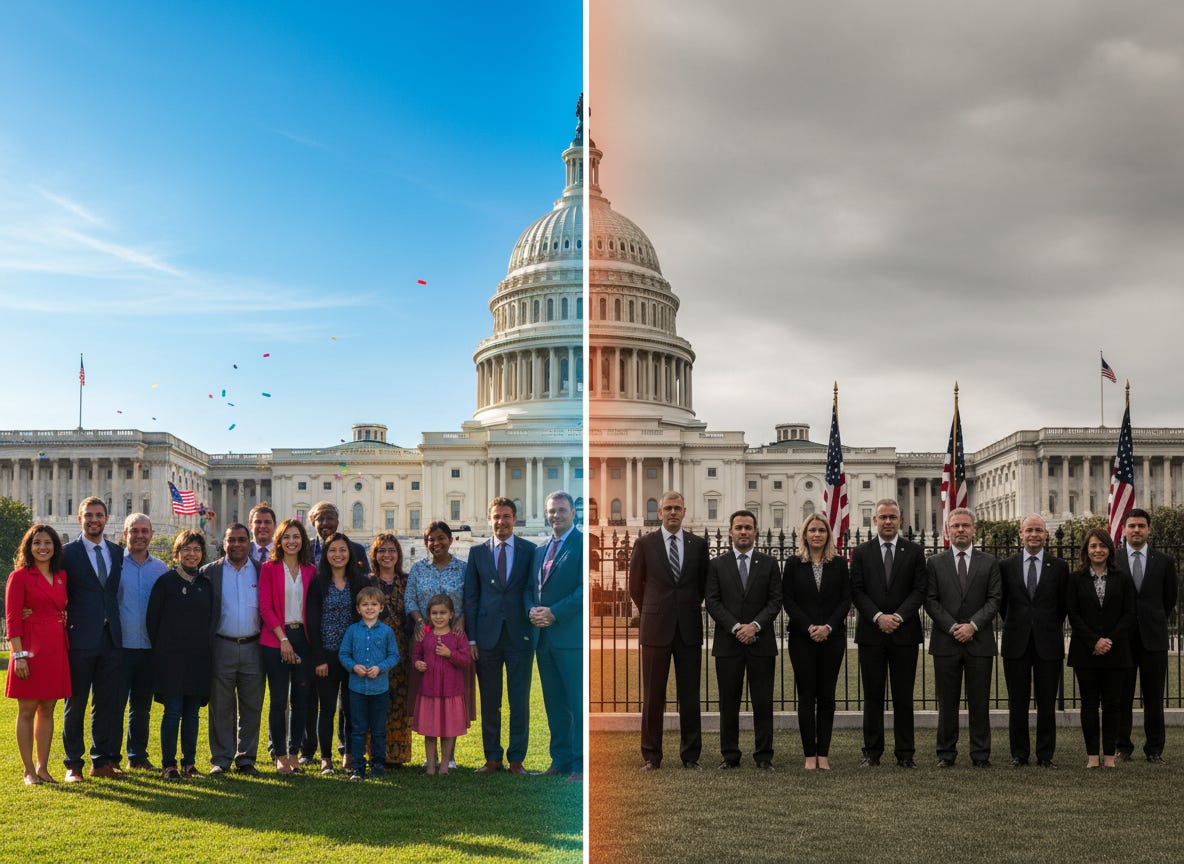
On January 19, 1989, Ronald Reagan delivered his final address as president. He quoted a letter: You can live in France but never become French. You can live in Japan but never become Japanese. But anyone can become American. Reagan used this idea to define the United States. In his view, being an American was about a commitment to a set of rules and ideals, American ideals. It was about including people - anyone can become American. Thirty-six years later, U.S. policy reflects a different definition of belonging; being an American is about race, origin, borders, it is about exclusion - only the ‘right’ people can be American.
The question is not which vision is better but which definition of national belonging a society chooses, and why.
Civic nationalism believes belonging is based on behavior, commitment, and ideals. You are part of the nation if you obey its laws, participate in its institutions, demonstrate loyalty through action, and embrace the nation’s ideals. Under this model, citizenship is something you earn. The nation functions like a contract, and if you meet the requirements, you are included.
Ethnic nationalism believes that belonging is based on inherited traits. You are part of the nation if you are from the accepted ethnicity or regions, born into the ruling group, and speak the dominant language and outwardly practice the dominant religion. Under this model, citizenship is based on where you were born and the color of your skin. The nation functions like a family, and membership is fixed at birth, it’s exclusionary.
Every country sits somewhere between these two models. France, for example, requires citizenship applicants to pass exams on secular republican values. This reflects civic nationalism. At the same time, France regularly debates whether Muslim religious practices are compatible with being “truly French,” which reflects ethnic nationalism. Japan offers permanent residency to some foreigners but grants citizenship to very few, even after decades of residence, language fluency, and cultural adaptation. This reflects strong ethnic nationalism. Germany historically defined citizenship by bloodline. A child born in Germany to non-German parents was not German. In 2000, the law changed to allow birthright citizenship under certain conditions. Despite this legal shift, integration debates around Turkish Germans continue, showing tension between civic and ethnic nationalism.
Reagan’s statement reflected the civic end of this spectrum, and the current Republican administration reflects the ethnic end. Neither position appeared suddenly; both draw from long-standing American traditions that have always existed side by side.
Several cultural frameworks help explain why societies favor one model over the other.
Achievement vs. Ascription
This framework asks whether status comes from what a person does or from who they are at birth. Civic nationalism is achievement-based, and citizenship depends on actions such as naturalization, military service, civic participation, and embracing the ideals of the nation. Ethnic nationalism is ascription-based, in which citizenship depends on ancestry, ethnicity, or birthright.
Individualism vs. Collectivism
This framework examines whether identity is defined by the individual or by the group. Individualist cultures emphasize personal choice and self-definition. These cultures tend to support civic nationalism. Collectivist cultures emphasize group continuity and inherited identity. These cultures tend to support ethnic nationalism.
Universalism vs. Particularism
This framework examines whether rules apply equally to everyone or vary based on relationships and background. Universalist systems apply the same citizenship rules to all applicants regardless of ethnicity, language, or where they were born. This is civic nationalism. Particularist systems sort people based on ethnicity, origin, lineage, or cultural similarity. This is ethnic nationalism.
These frameworks are not about moral correctness; rather, they explain why different societies, under different conditions, develop different definitions of belonging. This week examines those conditions.
Tuesday: Civic nationalism. How it developed, where it has worked, where it has failed, and concrete examples outside the United States.
Wednesday: Ethnic nationalism. How it operates, what problems it solves, what problems it creates, and where it remains stable.
Thursday: What causes societies to shift between models. Economic stress, migration levels, trust in institutions, and external threats. Why the United States in 1989 favored civic nationalism, and why it favors ethnic nationalism today.
Friday: Global implications. How different countries define national identity, and what trade-offs those choices create.
Saturday: The current U.S. situation analyzed through these frameworks, using material conditions rather than moral arguments.
The core argument of Cultural Perspective here is simple: there is no universally correct model of national identity. There are only models that function under certain cultural conditions and break down under others.
Reagan believed civic nationalism was America’s strength. Others argue that ethnic nationalism creates stability. This series evaluates both claims using evidence, institutional outcomes, and cultural structure, not political loyalty.
If you enjoyed this article, buy me a coffee!


My grandparents were absolutely not White when they arrived as refugees/immigrants. My parents lived to see themselves treated as honorary White. Over the last 20 years I have seen that status - always and only decided by white people - evaporate. Now it is fashionable once again to treat my ethnicity as Other.