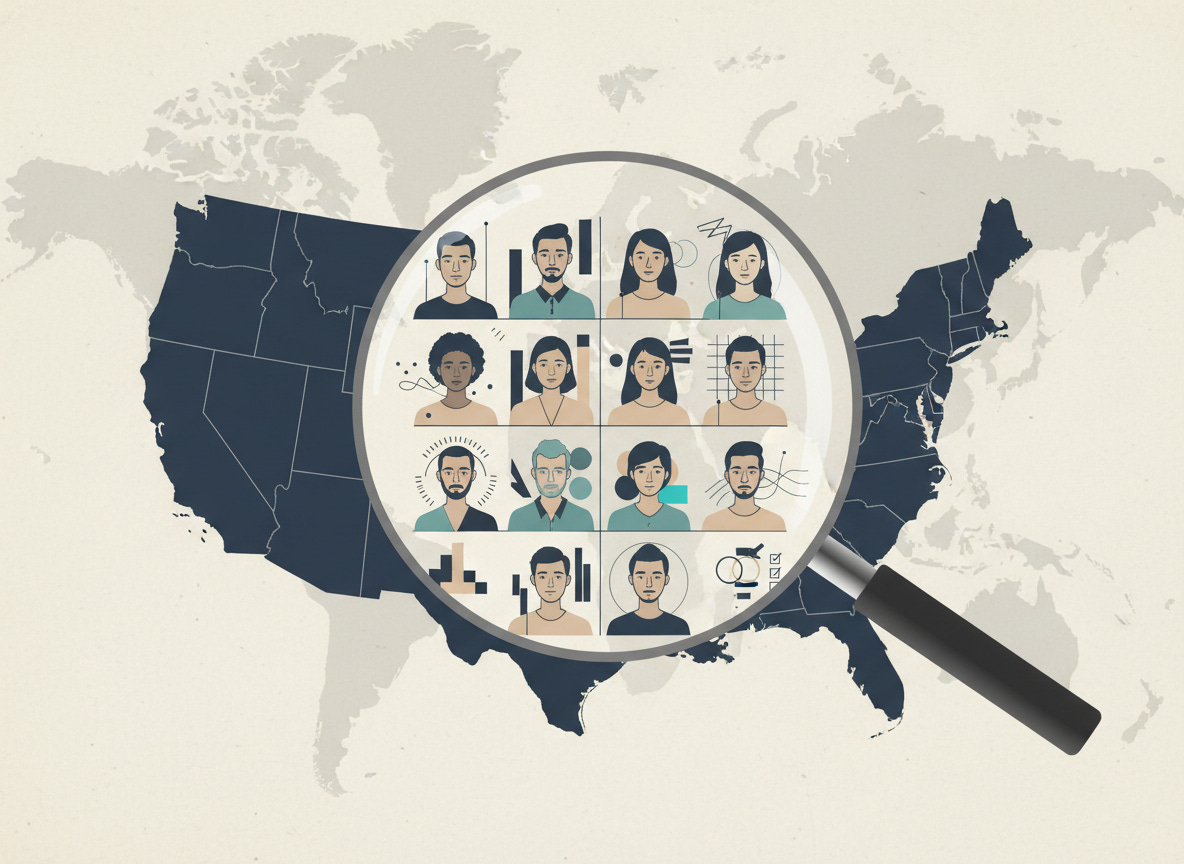
What Is American Culture? Monday's Edition
What does American culture look like to others? Series 17 #1
We seldom think about our own culture, because it’s just “how things are,” its litterly who we are, so we don’t see the forest for the trees. We do sometimes think about other cultures. Americans may notice when Japanese colleagues won’t give a direct answer, when a Mexican partner shows up late to a meeting, or when a French counterpart insists on a two-hour lunch. Americans notice these things because they are different from what is normal to them. But normal is the problem. When you think your behavior is the default for all humanity, you’re not understanding that it is cultural behavior that not everyone uses.
The way you act and interact is cultural behavior. All of it. American directness, the scheduling, the competitive instinct, the insistence on equal treatment, the firm handshake followed by a first-name introduction to someone you just met. None of this is universal. Most of it is unusual. And from a cultural perspective, Americans sit at the extreme end of several measurable behavioral scales that researchers have tracked across dozens of countries for decades.
For example, roughly 70% of the world’s population lives in collectivist cultures, places where group identity, family obligation, and social harmony drive daily decisions. The United States ranks near the top of the global individualist scale. Americans build their identities around personal achievement, make career decisions based on individual ambition, and move across the country away from extended family without a second thought. This feels normal to Americans. To most of the world, it looks bizarre, even lonely.
That gap between how Americans see themselves and how others see them creates real problems. American managers overseas give direct negative feedback, and their teams shut down. American negotiators push for quick deals and wonder why their counterparts in São Paulo or Seoul want to get together for another dinner first. American companies export performance-review systems built on individual metrics to cultures where singling someone out for praise humiliates them in front of their group.
These failures are caused by ignorance, not bad intentions. They happen because Americans assume their way of communicating, competing, organizing time, and distributing power is how everyone does it. It is not. Americans exhibit a specific, measurable set of behavioral patterns that differ from those of much of the rest of the world.
This week, we break down those cultural perspectives and what they look like.
Tuesday’s Edition examines how Americans construct their sense of self, why they genuinely believe they control their own outcomes, and what drives the constant pressure to achieve.
Wednesday’s Edition looks at how Americans communicate, why they say exactly what they mean and expect everyone else to do the same, and how they separate their professional and personal lives in ways that confuse people from other cultures.
Thursday’s Edition explores how Americans handle authority, competition, and risk, and why they flatten hierarchies while simultaneously putting winners on a pedestal.
Friday’s Edition covers how Americans schedule their time, demand fast results, and spend freely on pleasure when the workday ends.
Saturday’s Core Brief pulls it all together: how these patterns form a single, interdependent system that often clashes with the rest of the world, and what Americans can do about it.
But... the United States is not one culture. A fourth-generation rancher in Montana and a second-generation Korean American in Los Angeles do not experience American culture in the same way. While regional, ethnic, and socioeconomic variation is real, a national-level pattern does exist, and researchers have repeatedly measured it. These national-level cultural patterns define how the world views Americans, even though individual Americans may not match every one of those traits.
Many American readers may be surprised to find that their cultural perspective is not the default. They are the outlier. This series explains what that means and why it matters.
Sidebar: This series draws on five cultural research frameworks:
Geert Hofstede identified six dimensions of national culture from surveys of over 100,000 IBM employees across 50 countries.
Edward T. Hall defined how cultures communicate and experience time.
Fons Trompenaars mapped seven dimensions of how cultures handle relationships, rules, and the environment.
Shalom Schwartz identified ten basic human values that shape behavior across cultures.
M.J. Hornby proposed ten psychological archetypes that drive individual behavior within cultural systems.
If you enjoyed this article, help support my work by subscribing or “buying me a coffee.”


Im interested to read this. I live in Canada but raised in England. I never found Canadians to have a culture neither. Younger countries that are comprised of many seem to loose their origins over time..sure there are pockets of immigrants that planted themselves in one area and others overtime moved in. Such as the Chinese, Greeks, East Indians tied by their language and created rich cultural extensions of their heritage and homeland.
If you ask a European what US citizens are like they would say arrogant, loud and proud. But it would be hard to describe their "culture".
Infact not to long ago Donald Trump was described to me as a charicature of an American. Ouch.
The USA hasn’t been able to unify as a melting pot.