

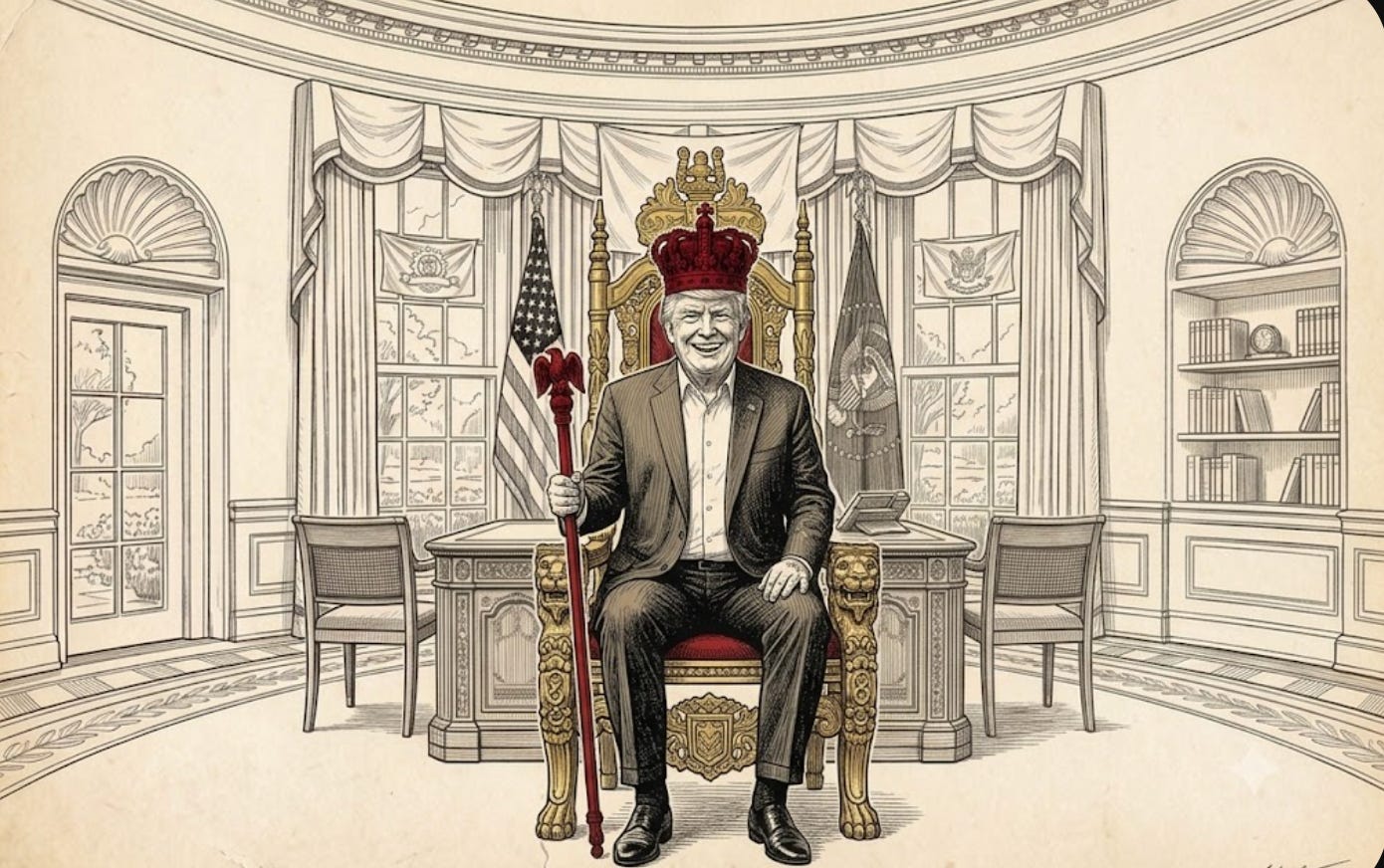
In November 2026, Americans vote for a new Congress, the first test of Trump’s control of Congress since he returned to office. As of late July, prediction markets give Democrats about an 83 percent chance of winning the House. Democrats lead by five to eleven points when voters are asked which party they prefer. Republicans are likely to keep the Senate, where a 50-50 split would be broken by Vice President JD Vance. The November elections decide whether the people who could stop Trump from taking a third term (or more) gain control of Congress, or whether those who support the President For Life gain control.
Trump wants to keep power; he has made that clear. The Republican Party supports Trump; none have pushed back on his move for a third term. The Supreme Court supports Trump as well, but to a lesser extent. Trump acts from a North, Power-seeker drive, the need to rule and hold on to power. The question is what that he does next and if the voters can stop him.
The answer to that question is in the historical patterns.
Political scientists call the system dictators in a democratic build competitive authoritarianism. Elections still happen, but the leader tilts the field so his side almost always wins. Steven Levitsky and Lucan Way coined the term in 2002 for Serbia, Kenya, and Peru. In 2025, they wrote, with Daniel Ziblatt, that the United States had crossed into it: Trump filled the courts with loyalists, replaced civil servants with supporters, used the government to punish rivals, and changed both who can vote and what people can vote on.
