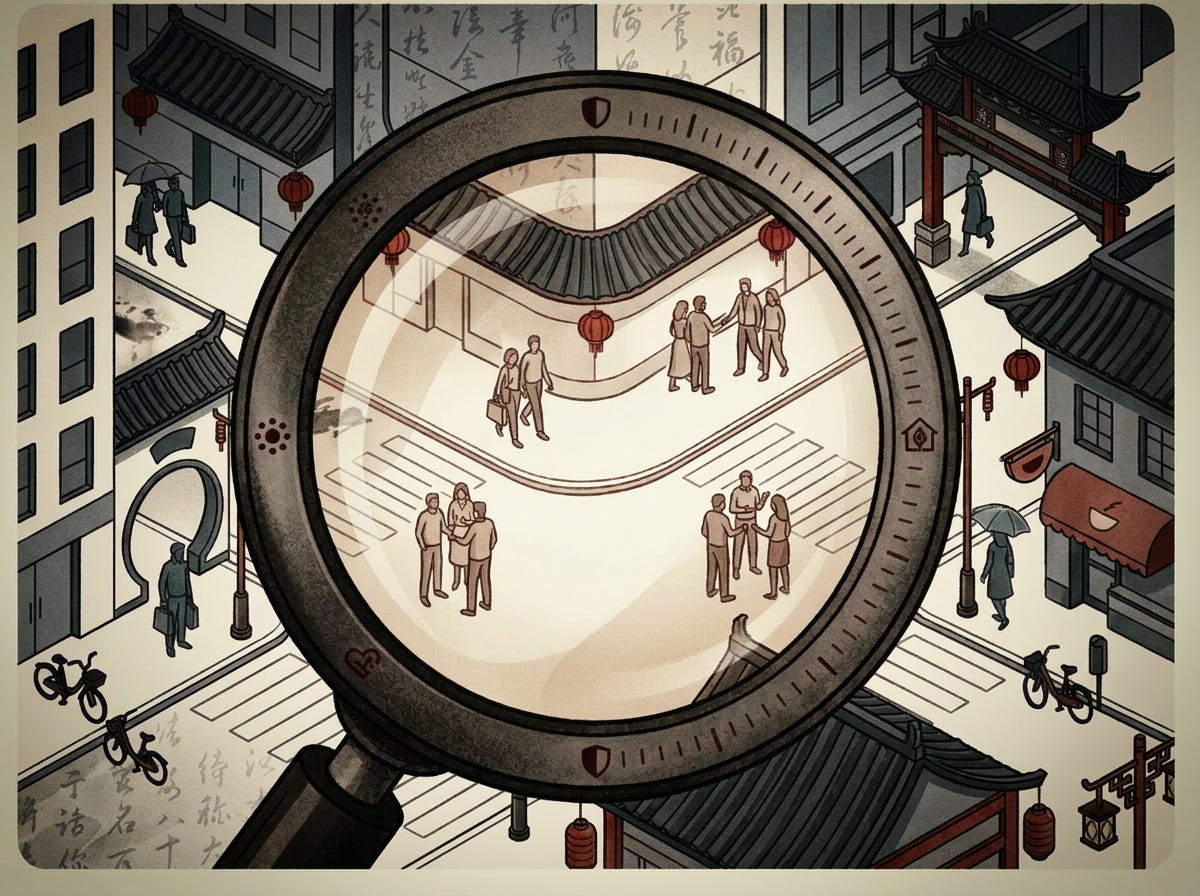
This Is Why China Seems So Different
The U.S. frames China as an authoritarian government. Its citizens compelled through intimidation to obey government officials. An oppressed, freeless people, surviving day to day. It is not true.
Presenting China this way is a function of both propaganda and a gross misreading of cultural perspectives.
Here are five cultural dimensions that help explain why Americans get China wrong.
The group decides, not the individual. Cultural theorist Fons Trompenaars called this communitarianism. Cultures where individuals and the government make decisions based on how their actions affect others, not just themselves. In China, decisions are weighed by how they affect the group: family, company, party, country.
The U.S. sits on the other end. There, individualism rules. Personal choice and personal benefit come first. So when an American sees a Chinese citizen obey a government rule, the American reads it as forced obedience. It is not. The cultural perspective is to join in, just as the American cultural perspective is to do it alone.
Concern for others, not personal achievement. Cultural theorist Shalom H. Schwartz called this benevolence. It’s more than wanting to be part of the group; it’s attending to the well-being of those around you. In China, an official is treated as a steward of the group. Supporting that official is part of supporting the members of the group.
The U.S. sits on Schwartz’s achievement pole. There, personal success is the most important value. Visible individual wins, awards, and titles come first. So when an American sees a Chinese citizen praise an official, the American reads it as fear or coercion. It is not. The cultural perspective is to honor the leaders who care for the group, just as the American cultural perspective is to celebrate the individual who achieves great things alone.
Stability and harmony over liberty. Schwartz also identified a security cultural dimension. Cultures where individuals and the government treat social order, stability, and harmony as core values. In China, people want stability and harmony, and they expect the government to provide it.
The U.S. sits on the other end. There, liberty rules, and they expect the government to provide personal freedom and personal choice. So when an American sees Chinese citizens back the government on a hard policy, the American reads compliance under threat. It is not. The cultural perspective is to value stability and harmony, just as the American cultural perspective is to value liberty.
Decades, not quarters. Cultural theorist Geert Hofstede called this long-term orientation. Cultures where individuals and institutions plan in decades, accepting small sacrifices now for larger gains later. In China, the population understands and accepts an inconvenience today for gains tomorrow.
The U.S. sits on the other end. There, the short term is the focus: the news cycle, next quarter, the next election. So when an American sees Chinese citizens accept a sacrifice, like a lockdown, a tax, or a relocation, the American reads helpless suffering under an oppressive government. It is not. The cultural perspective is to see the long-term picture, just as the American cultural perspective is to focus on the here and now.
Quality of life, not personal accumulation. Hofstede also identified the quality of life dimension. Success is defined as time with family and friends, pursuing hobbies and interests, and having experiences.
The U.S. sits on the other end, where success is defined as Income, assets, and career. So when an American sees a Chinese household with less personal wealth than an American household, the American reads poverty and oppression. It is not. The cultural perspective is success measured by quality of life, just as the American cultural perspective is success measured by money and assets.
Each dimension on its own creates misunderstanding. Together, they create a fundamentally different understanding of how life is lived. Neither system is better or worse, superior or inferior. They are just different. It is up to both sides to understand that.
If you enjoyed this article, help support my work by becoming a paid subscriber or “buy me a coffee.”


I’m an American who has lived in China since 2012. I can say confidently that there is enough truth to reasons 1, 3 and 4 that I’m not going to waste any time criticizing them. However, while there may be lip service given to reasons 2 & 5, in practical day to day terms nothing could be further from the truth. The population density has created a situation in which other people are treated with complete indifference. If you don’t know someone’s name then you treat them no differently than you would a rock or a an old stump. And society here, at least in the last 20 years or so, ever since the carrot-on-a-stick of upward mobility has been dropped in front of their faces, has degraded to a constant and vicious game of oneupmanship and keeping up with the Joneses, except that most people still don’t have the ability to become affluent, so they resort to bragging and lying and tearing each other down in order to appear a little higher in the pecking order than their neighbors. This state of affairs is more prevalent in the villages than the cities, but the villagers still make up the vast majority of the population.
I have no idea if it's the same when it comes to your take on China, but most of what you said about the US is really "in theory"
That was true in several places, but I'll just throw out one example of what I mean
A lot of Americans despise individual freedom to the point they expect the government to rob others of the freedom to do some--thing despite the fact other people doing said thing has zero impact on them either directly or indirectly