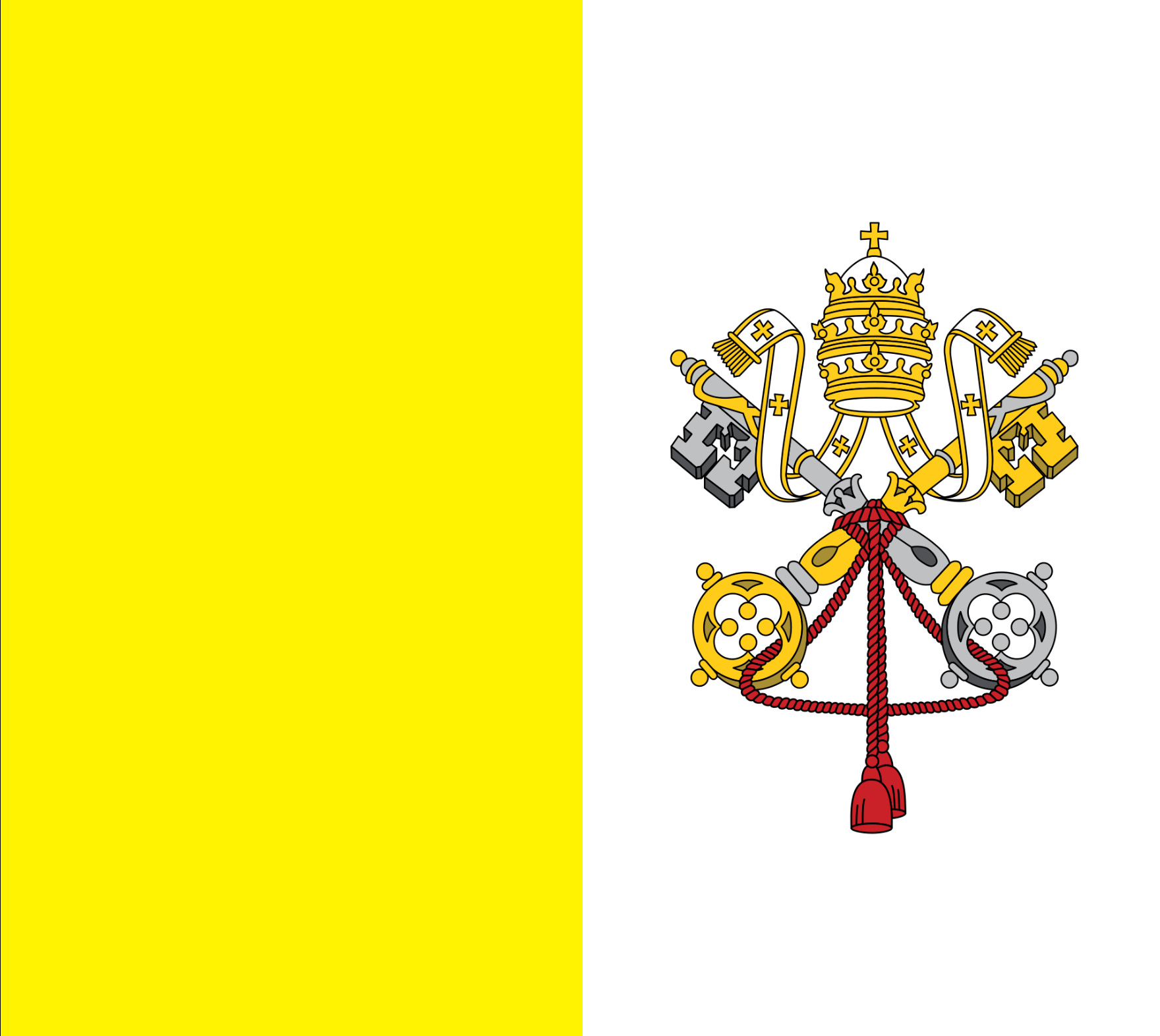
The Long Game — The Holy See: Governing Without a Country. Tuesday’s Edition
Why Some Governments Endure. Series 20 #2
In the first century AD, a small Jewish sect was spreading through the Roman Empire. Its followers believed a carpenter from Galilee had risen from the dead, and they organized themselves around that belief with surprising institutional discipline. When the movement’s leader, Peter, arrived in Rome, he became the first bishop of the most powerful city in the world. That office, the Bishop of Rome, never stopped operating. It still exists today. The institution built around it, the Holy See, has governed continuously for over 1,700 years, through the collapse of Rome, the Black Death, the Reformation, two world wars, and 59 years without a single square meter of territory to its name.
Understanding why requires understanding how the Holy See works.
It built a succession structure that removed personal dependency from the governing process. When a pope dies, the College of Cardinals elects a replacement through a defined, closed process called the conclave. The rules are specific, the timeline is bounded, and the outcome is binding on the entire institution. No pope’s death has ever left the Holy See without a clear path to the next leader. This matters because most governments that collapse do so at the moment of leadership transition, the point where personal authority ends and the institution has no way to transfer power cleanly. The Holy See solved that problem early and built the solution into its permanent structure.
The Holy See divided its governing responsibilities across multiple bodies and roles so that no single person has too much control. The Roman Curia, the administrative body that manages the Church’s global operations, runs continuously regardless of who holds the papal office. When a pope dies, the Cardinal Camerlengo administers the finances and properties during the vacancy. The College of Cardinals governs collectively until a new pope is elected. The institution is not dependent on a single person to function.
These two features helped the Holy See survive its two most severe tests. From 1309 to 1377, political pressure from French King Philip IV forced the papacy out of Rome to Avignon in southern France. Seven consecutive popes governed from French territory under conditions that made the papacy a political instrument of the French government. Despite this, the conclave process, the Curia, and the College of Cardinals continued operating exactly as designed. When Pope Gregory XI returned to Rome in 1377, the institution continued without interruption.
The second test was more extreme. In 1870, Italian nationalist forces seized Rome and absorbed it into the newly unified Kingdom of Italy. The Holy See lost all of its territory. By any conventional measure of what a government requires, land, physical sovereignty, and military force, the Holy See had ceased to exist. However, ambassadors continued working. The Holy See continued sending nuncios to foreign capitals. Major powers maintained formal diplomatic relations with an institution that had no country. That situation lasted 59 years, until the Lateran Treaty of 1929 restored territorial sovereignty. The institutions continued operating, so the government never stopped.
Today, the Holy See governs roughly 1.3 billion Catholics, a population defined by belief rather than geography. Those 1.3 billion people come from every culture on earth, high- and low-context, collectivist and individualist, high- and low-power distance, speaking hundreds of languages and organizing their lives around entirely different cultural perspectives. What binds them is a set of core beliefs about human life, death, and meaning. That common cultural system is the cultural fit that holds the institution together across every other cultural difference. When Italy took Rome in 1870, it removed the territory. It couldn’t remove the culture that people choose. Every other government on this list governs people who were born inside its borders. The Holy See is unique among all long-surviving governments because its population chose to be Catholic.
Sidebar: The Holy See — A Timeline
~33 AD: Peter arrives in Rome, becomes the first Bishop of Rome
325 AD: Holy See sends representatives to the Council of Nicaea — earliest historically verified diplomatic activity
756 AD: Papal States established, giving the Holy See territorial sovereignty for the first time
1309–1377: Papacy relocates to Avignon, France under French political pressure
1377: Pope Gregory XI returns the papacy to Rome
1870: Italian nationalist forces seize Rome — the Holy See loses all territory
1929: Lateran Treaty signed — Vatican City created, territorial sovereignty restored
1964: Holy See granted permanent observer status at the United Nations
Today: Maintains formal diplomatic relations with 183 countries, governs 1.3 billion Catholics across every continent
If you enjoyed this article, help support my work by becoming a paid subscriber or “buying me a coffee.”


