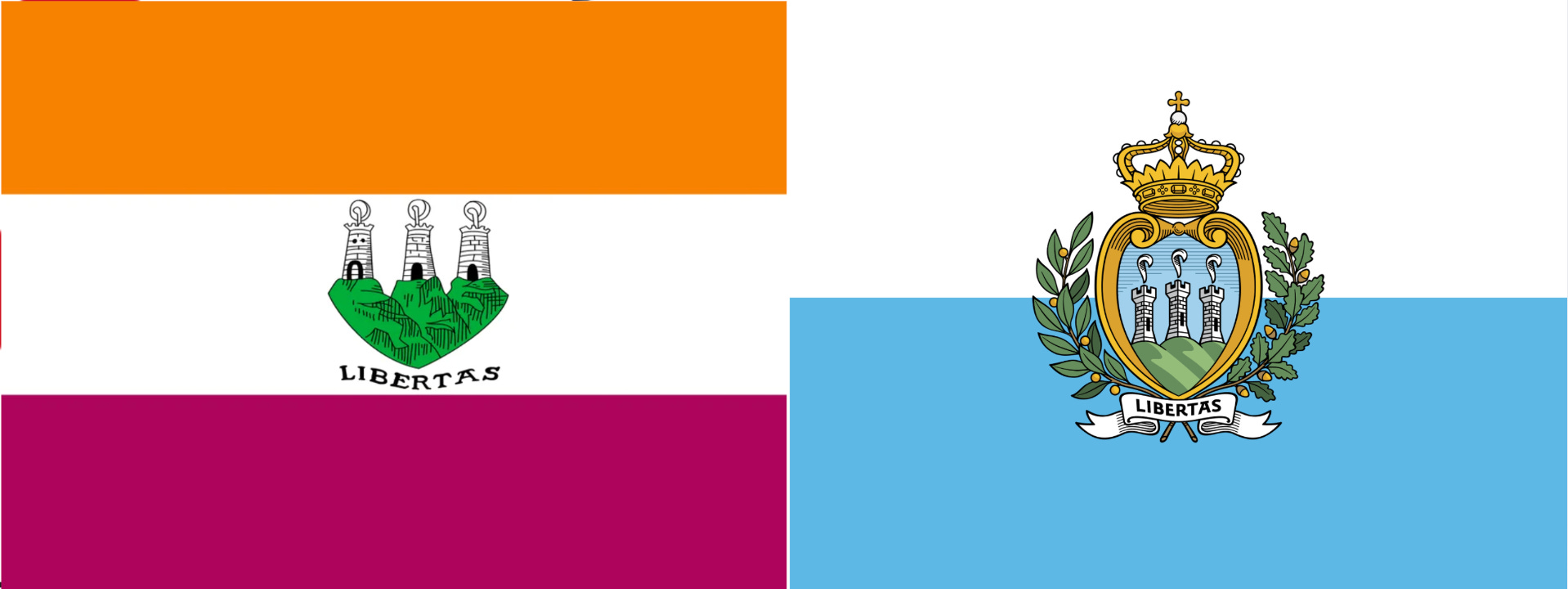
The Long Game — San Marino: The Republic Nobody Conquered. Wednesday’s Edition
Why Some Governments Endure. Series 20 #3
In 301 AD, a stonemason named Marinus fled Roman persecution and climbed a mountain in central Italy. He built a small Christian community on the peak of Mount Titano and, according to tradition, spoke these words before he died: Relinquo vos liberos ab utroque homine — “I leave you free from both men,” meaning the Emperor and the Pope. That founding declaration wasn’t just spiritual. It was a political identity. The community Marinus left behind organized itself around it, and that organization has never stopped functioning. Today, it is the world’s oldest republic, a 23.5-square-mile territory entirely surrounded by Italy, with a population of 33,000, and a 1,700-year history.
Its geography helps. Mount Titano sits high in the Apennine Mountains. Medieval armies found it difficult to reach and expensive to assault. In countless European wars over 1,700 years, San Marino presented no strategic prize worth the effort of conquering it. The lords of Montefeltro tried. The Malatesta of Rimini tried. Cesare Borgia occupied it briefly in 1503 before his father’s death ended his campaign. The mountain gave San Marino time to build something as durable as the geography.
What it built was a government designed from the start to prevent any single person from accumulating enough power to destroy the republic from within. In 1243, San Marino established the Captains Regent, two co-heads of state, elected every six months, drawn from opposing political parties, serving simultaneously with equal authority. Neither can act without the other. Neither serves long enough to consolidate control. When their term ends, they face a three-month cooling-off period before they can hold any public office again. It still operates this way today.
In 1600, San Marino codified its governing principles into the Statutes of 1600, the world’s oldest written constitution still in force. The document fixed the legal framework the republic had operated under for four centuries, gave it permanence, and made future leaders answerable to written law rather than personal authority. When Napoleon’s forces swept through Italy in the late 18th century and dismantled every surrounding republic, San Marino survived. Napoleon actually offered to expand its territory. San Marino declined, a decision that illustrates the second reason it has lasted.
The population didn’t just live in the republic; they believed in it. Being Sammarinese meant being independent, neutral, and committed to the republic’s survival. Expansion and personal gain are not part of San Marino’s cultural perspective. San Marino’s government model succeeds because the population’s values and the republic’s design point in the same direction. The two Captains Regent and the six-month term limit system reflect the nation’s cultural suspicion of concentrated power. The decision to decline Napoleon’s offer reflects a population that understood their survival depended on staying small and neutral, not on growing powerful.
A mountain that made conquest expensive. A constitution that made dictatorship impossible. A population that chose independence over expansion every time the choice presented itself. That combination produced the world's oldest republic.
Sidebar: San Marino — A Timeline
301 AD: Marinus founds a Christian community on Mount Titano
885 AD: Placito Feretrano — first written document recording the San Marino community
1243: First two Captains Regent established as co-heads of state
1295: First body of laws promulgated by the Arengo assembly
1463: Territory expanded to current borders — unchanged since
1503: Cesare Borgia occupies the republic briefly — independence restored within months
1600: Statutes of 1600 adopted — world’s oldest written constitution still in force
1797: Napoleon recognizes San Marino’s independence — declines his offer to expand its territory
1815: Congress of Vienna ratifies San Marino’s independence
1992: San Marino admitted to the United Nations
Today: 33,000 people, 23.5 square miles, still governed by two Captains Regent serving six-month terms
If you enjoyed this article, help support my work by becoming a paid subscriber or “buying me a coffee.”


