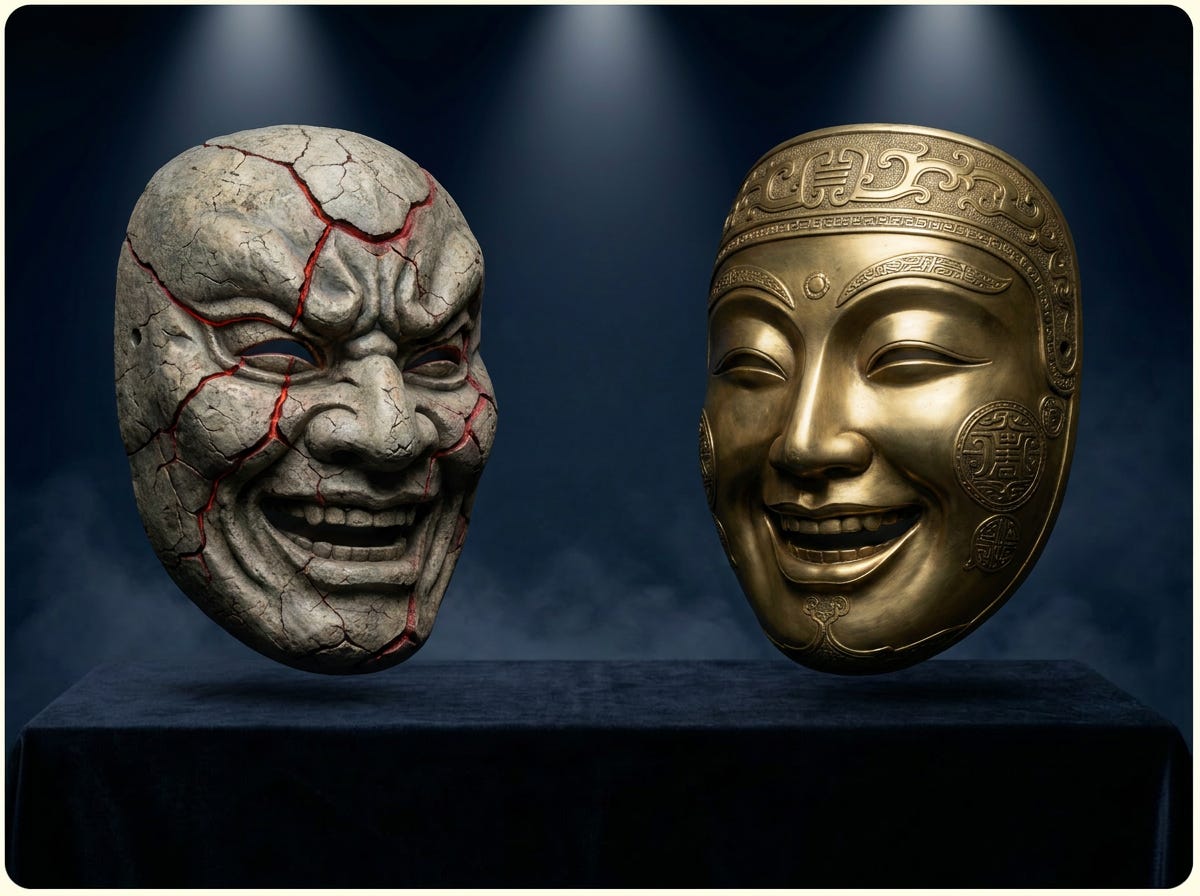
The Honor-Face Match - Iran And China. Friday’s Edition.
Three cultural dimensions in diplomacy. Series 24 #3
Iran and China are unlikely partners. Yet, they are five years into a 25-year strategic agreement, and this week in Beijing, Iranian Foreign Minister Abbas Araghchi met with Chinese Foreign Minister Wang Yi.
Wang Yi called for an immediate end to hostilities and condemned what he called warmongering by the United States and Israel. China continues to buy more than one million barrels of Iranian oil per day. The United States sanctioned a major Chinese refinery in April for processing Iranian crude. The relationship between China and Iran has not weakened. It has deepened.
When Israel and the United States began strikes on Iran in February 2026, most Western analysts predicted China would distance itself from Tehran. The argument was that China had too much to lose: trade with the West, a carefully cultivated reputation, and a history of avoiding direct conflict. None of those predictions have come true.
Western analysts from dignity cultures assume that face and honor cultures have difficulty coordinating because the two appear very different. The opposite is true. Face culture and honor culture fit each other in ways Western dignity culture do not understand.
Monday’s edition introduced the three cultural perspectives. Dignity cultures treat worth as intrinsic. Honor cultures treat worth as something that must be claimed and defended publicly. Face cultures treat worth as positional and maintained privately.
In face cultures, public criticism causes both parties to lose face. The one being criticized loses face because they have been visibly criticized. The one doing the criticizing also loses face because they caused public conflict and disrupted the harmony. Face cultures deal with disagreements through private channels.
China applies this rule consistently. China does not publicly criticize Iran’s nuclear program, its support for proxy groups, or its internal politics. China’s public statements about Iran are cautious, even when Iranian actions run counter to Chinese interests. Western analysts read this as Chinese weakness or appeasement. It is neither. It is normal face of cultural diplomacy.
In honor cultures, public criticism is an attack on reputation that demands an answer. Iran cannot accept public criticism from a more powerful state without responding, because failure to respond is a loss of reputation.
China never puts Iran in this position. Whatever China wants from Iran is communicated in private, in language that allows Iran to comply without public humiliation. Whatever Iran wants from China is communicated privately, and Iran does not publicly pressure China.
In this arrangement, face culture gets the private negotiation it requires. Honor culture gets the public respect it requires.
Western diplomacy is built on public pressure: sanctions announced at press conferences, criticism delivered at the UN, demands published in joint statements. From a dignity perspective, public pressure is normal and effective. From a face perspective, it makes cooperation impossible. From an honor perspective, it demands a response and escalation.
Western attempts to pressure China and Iran at the same time usually produce the opposite of what Western governments want. The pressure that Western diplomacy expects will divide them keeps them together.
In 2006, the UN Security Council voted on sanctions targeting Iran’s nuclear program. China abstained rather than voting against. Public opposition to a U.S.-led resolution would have been a public confrontation. Public support would have damaged China’s reputation.
In 2015, the Joint Comprehensive Plan of Action (JCPOA) succeeded because the framing allowed Iran to accept limits without public submission. The deal was presented as an agreement between Iran and the P5+1, not as a Western imposition on Iran. China supported the deal because the structure preserved everyone’s reputation.
In 2018, the United States withdrew from the JCPOA unilaterally and publicly. From an honor perspective, the withdrawal humiliated Iran, and Iran could not return to the same deal afterward. From a face perspective, China could not be seen forcing Iran back into a deal the United States had just publicly broken.
In 2021, China and Iran signed a 25-year strategic cooperation agreement covering oil, infrastructure, military cooperation, and political alignment. The Western prediction was that it would not hold. It has.
In April 2026, after Israel and the United States attacked Iran, China made a last-minute push on Tehran for a temporary ceasefire. It was a behind-the-scenes mediation.
Honor and face cultures understand the rule: never criticize others in public. They disagree about where respect comes from, but they do know that public criticism ends cooperation. Dignity cultures routinely use public criticism. To honor and face cultures, those moves strain the relations and eventually end the relationship. That is why honor and face cultures work together and why dignity cultures cannot keep stable relationships with either of them.
Saturday’s Core Brief makes three specific predictions for 2026: the Iran nuclear talks, the U.S.-China tariff negotiations, and the Russia-Ukraine settlement track. Each prediction is grounded in a cultural mismatch that readers can name.
If you enjoyed this article, help support my work by becoming a paid subscriber or “buy me a coffee.”


