

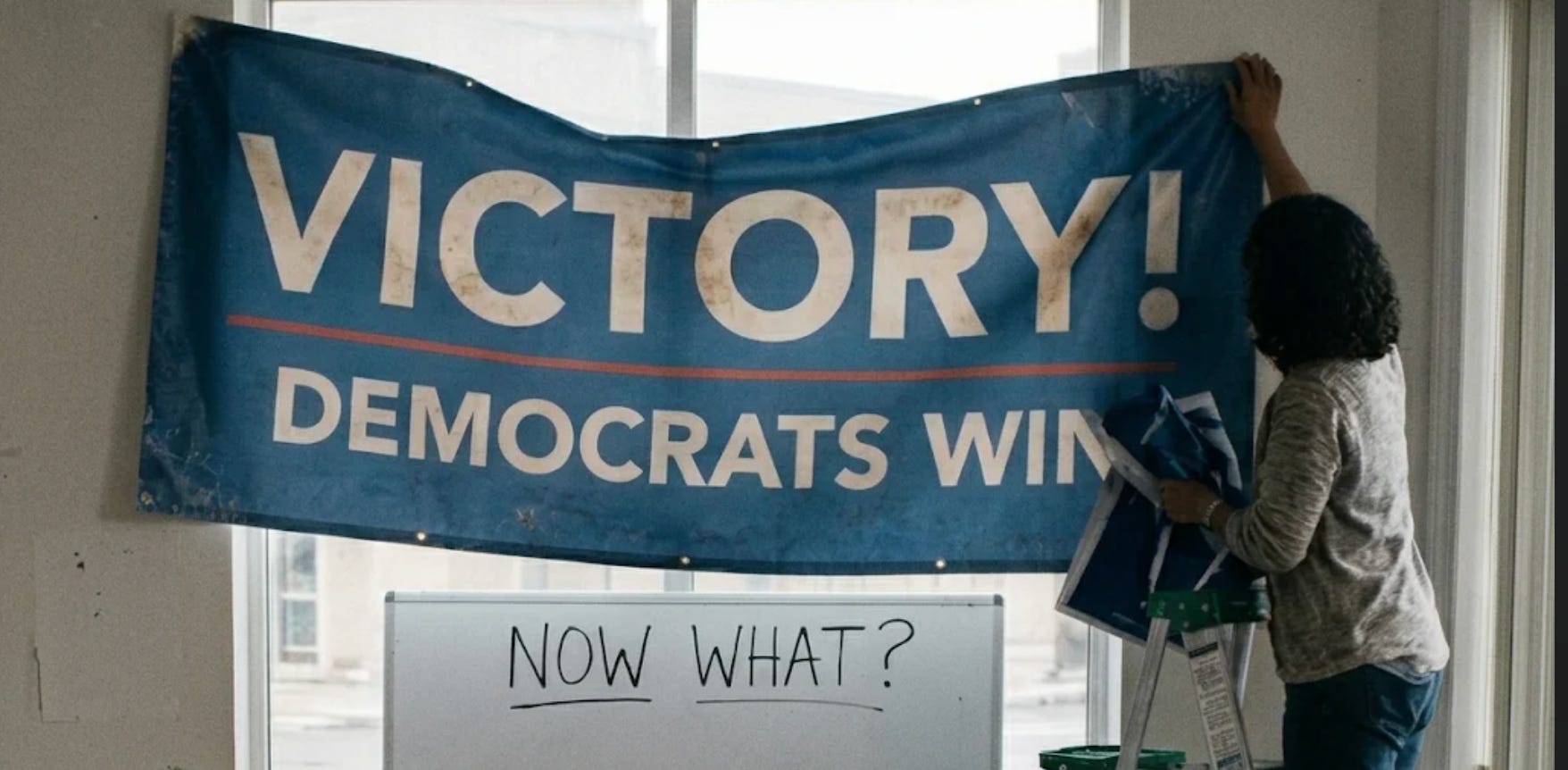
America delivered a devastating defeat to Trump and the Republicans, giving control of the House and Senate to the Democrats. (CBS News)
Americans voted for change. But the Democratic establishment wants to keep its power.
Chuck Schumer wants to lead the Senate. Hakeem Jeffries now leads the House. Both helped deliver an extraordinary victory. Both have powerful supporters who believe that victory justifies keeping them in charge.
But America voted for change, not the same old guard.
Senator Chris Van Hollen is running against Schumer. Eleven House Democrats voted against Jeffries, although 251 supported him. The American people want leadership that confronts wealthy special interests, prosecutes the Trump administration, and delivers the political and economic reforms voters demanded. (Reuters)
The Democrats won control of Congress. Now the struggle is over who controls the Democrats.
The Democratic establishment needs to understand that winning an election does not mean winning the cultural battle.
America has seen this before. In 1912, a struggle inside the Republican Party changed the course of American politics.
President William Howard Taft controlled the Republican establishment. Former President Theodore Roosevelt led the progressive movement demanding reforms against corporate power, corruption, and economic inequality (sound familiar?).
Roosevelt believed the Republican leadership was standing in the way of the changes Americans wanted. He challenged Taft for the presidential nomination, but the Republicans gave the nomination to Taft.
The Republican vote fractured, and they lost the White House. (American Presidency Project)
That is the danger facing the Democrats today. Established leaders defend the authority they have earned while reformers demand a different political direction.
This is a cultural battle, not simply a contest between politicians.
Cultural researcher Fons Trompenaars identified two competing ways people assign authority: Achievement and Ascription:
Achievement assigns authority to people based on what they have accomplished and the results they have produced.
Ascription assigns authority to people based on their position, age, seniority, or social status. (Trompenaars & Hampden-Turner)
Schumer and Jeffries have earned their positions through political experience, relationships, and electoral success. Their supporters see the November victory as proof of their ability to lead. That is Achievement.
But political leadership creates Ascription. Seniority brings influence. Personal relationships protect positions. Established leaders gain authority because they are established authorities, not because they deliver results. That is Ascription.
The reformers are challenging that Ascription. They want leaders judged by what they accomplish with their new congressional power, not simply by the election they helped win.
The establishment sees victory as proof it’s what the people want. Reformers see victory as proof America wants change.
The same election. Two different perspectives.
Psychologist Shalom Schwartz identified another conflict: Openness to Change versus Conservation. (Schwartz, 2012)
Conservation emphasizes following traditions, respecting established rules, and preserving existing institutions and ways of doing things.
Openness to Change emphasizes making independent decisions, trying new ideas, and changing rules and practices that no longer work.
The Democratic establishment believes traditional methods, established rules, and existing institutions won Congress. Reformers know new ideas and priorities won the day and are what Americans are demanding.
When leaders preserve established practices while their supporters demand reform, frustration turns into political organization. Activists recruit challengers. Incumbents face primary elections. Leadership contests become battles over the party’s future.
That is how cultural values turn into political power.
The test comes in January.
Starting 3 January, the Democrats can investigate the Trump administration, hold hearings, block Republican legislation, and challenge the administration through federal spending. They cannot enact their entire agenda because presidential vetoes and Senate procedural limits will block them.
But they can act. And voters will judge those actions.
Americans will see whether Democrats expose wrongdoing, demand accountability, confront corporate influence, and pursue reforms that improve people’s lives.
If they deliver, the established leadership strengthens its authority.
If they fail, reformers prove that replacing Republicans was not enough and replacing establishment Democrats is needed.
That is the difference between political authority and cultural legitimacy.
Schumer and Jeffries can lead that change, or they can defend the established order and be replaced.
If you enjoyed this article, help support my work by becoming a paid subscriber or “Buy me a coffee.”
Get a solid understanding of Trompenaars’ cultural dimensions by purchasing the guide or subscribing to Cultural Perspective (free or paid) and receiving the guide for free.

Now democrats need to demonstrate that they can get things done. Given that their first attempt failed by 11 not showing up to impeach Hegseth is not very encouraging.