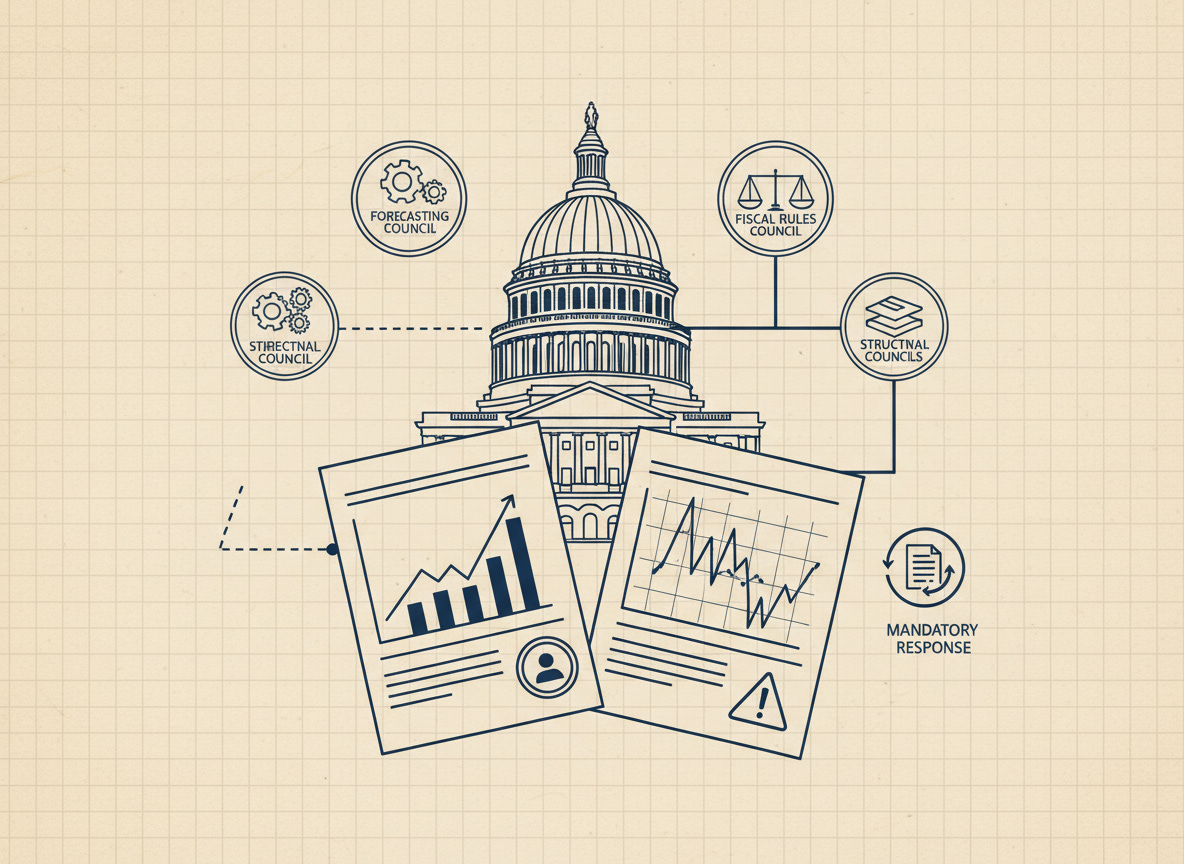
The American Fix - Expert Policy Councils. Wednesday's Edition.
How to restore trust in America after the Trump-Republican regime falls. Series 16 #3
The Trump-Republican administration has made basic mistakes about the economy, trade, and national security. This despite the United States having independent expert bodies that provide objective analysis. The Congressional Budget Office produces nonpartisan economic forecasts and cost estimates. The Government Accountability Office audits federal programs and investigates how taxpayer dollars are spent.
The problem is, the administration can ignore their analysis without consequence. In fact, the Trump administration has routinely ignored the information and gone so far as to publish its own numbers with no data to support them. This makes American policy unreliable. Neither Americans nor foreign governments can trust that U.S. policy reflects sound analysis rather than political calculation.
Multiple democracies have solved this problem through independent expert policy councils that provide technical analysis free from political pressure; the U.S. used to have this also. These governments are not required to follow the recommendations, but in many countries, not following the recommendations requires an explanation from the administration.
The UK: The government can deviate from forecasts but must publicly explain why.
Sweden, Ireland, Spain, Portugal, and Denmark run fiscal councils that monitor whether governments comply with budget rules. Governments must respond to council reports with either a corrective plan or a public explanation for non-compliance.
Ireland and France: The government must respond to recommendations, but can reject them
These councils have power by making it politically costly for the executive to ignore expert analysis, not by legally forcing governments to follow advice. Similarly, in previous U.S. administraions transparency creates political accountability. That is no longer the case with the Trump-Republican administration.
Accountability, along with consequences, is needed in the U.S.
A three-tier system combining these models, along with consequences for not complying, could be the answer.
Tier one: The Official Economic Forecasting Office creates the baseline numbers everyone uses. This office predicts economic growth, inflation, government revenue, and government spending. When the White House proposes a budget, it must use these official predictions. Five to seven economists run the office, serving long terms, so no president can fire them for political reasons. Congress funds the office with a budget that cannot be cut below the cost of keeping up with inflation.
Tier two: Fiscal Sustainability Council checks whether the government is following its own debt and deficit rules. The council publishes an annual report that shows whether government borrowing and spending remain within legal limits. If the government breaks the rules, it must respond, explaining either how it will fix the problem or why the rules should not apply to the specific situation, and back up its explanation with evidence. Seven to nine fiscal economists and former budget officials run the council, serving long terms to prevent political interference.
Tier three: Structural Policy Advisory Councils study major policy questions across areas such as economic growth, climate, healthcare, and infrastructure. Each council researches long-term problems, evaluates proposed solutions, and calculates the costs of the policies. Domain experts, economists, scientists, and engineers serve five-year terms. These councils give advice but can’t force decisions. The government can ignore recommendations, but cannot prevent their publication.
Independence requires five mechanisms:
Fixed terms with removal only for misconduct.
Bipartisan appointment where the president can nominate only qualified individuals, but Senate confirmation requires approval from both parties.
Independent funding is protected by law.
Mandatory government response to all recommendations with published reports. If the government decides not to follow the recommendations, it must provide a reason why backed by verifiable evidence.
Real consequences for non-compliance, such as removal from office.
Expert councils attract Sages who build expertise through problem-solving and value verified knowledge. Power-seekers avoid advisory roles because they lack decision authority. The structure selects for candidates who want to govern competently through technical excellence.
Expert Councils fit American cultural values. The United States operates as an achievement culture where status comes from demonstrated competence. Council members earn positions through expertise in their fields. Americans prefer low-context communication, explicit rules, and clear requirements. Expert councils have defined mandates, publish all analyses, create transparent appointment processes, and specify objective qualifications. Americans operate in a universalist culture where the same rules apply regardless of relationships or circumstances. Expert councils serve every administration equally. A Democratic president and a Republican president both receive identical analyses from the same forecasting office, using the same methodology. Each must either follow the recommendations or provide the same level of evidence to justify not following them. Each follows the same consequences.
This approach restores domestic and international credibility. Foreign governments see American policy based on independent analysis rather than political expediency.
Tomorrow: stable parliamentary systems that prevent government collapse.
SIDEBAR: INDEPENDENT EXPERT COUNCILS IN DEMOCRACIES
UK Office for Budget Responsibility (OBR)
Netherlands Central Planning Bureau (CPB)
Sweden Fiscal Policy Council
Ireland Fiscal Advisory Council
France High Council of Public Finances (HCFP)
Australia Productivity Commission
Germany Council of Economic Experts
Common Features:
Long fixed terms (5-7 years)
Bipartisan or independent appointment
Protected budgets
Mandatory government response to reports
Publication rights government cannot block
If you enjoyed this article, help support my work by “buying me a coffee.”


