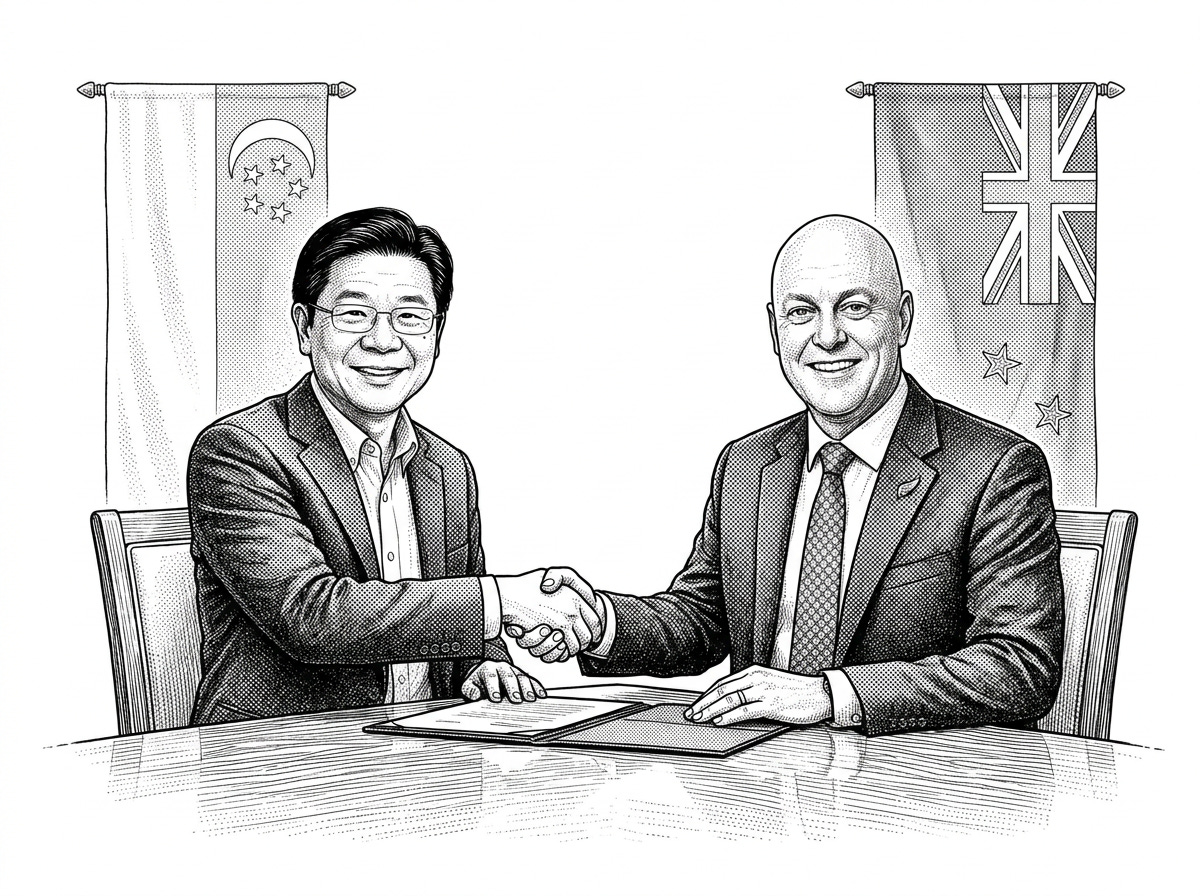
Singapore's Wong And New Zealand's Luxon - Making All The Right Moves
Singapore and New Zealand signed an agreement on 4 May to keep specific essential goods moving between them during a crisis, and they want others to join them. This is what merchant city-states and small nations have done for millennia.
The Historical Pattern
Venice used this strategy from the 13th through the 15th centuries. The Hanseatic League, an alliance of north German trading cities from the 13th to the 15th century. Malacca on the strait between Sumatra and the Malay Peninsula in the 15th and early 16th century. Each was small and had no resources of its own. Each survived by being needed by powerful nations. So each built networks of trusted partners. They signed agreements among themselves to keep goods moving regardless of who was at war.
The second pattern is more recent. In 2002, three small economies, Chile, New Zealand, and Singapore, launched the Pacific Three, a minor trade pact. Brunei joined in 2004, making it the P4. Larger economies began joining the talks in 2008, and by 2018, that small framework had grown into a trade deal with 11 members, now called the CPTPP, that covers about 14 percent of global GDP. The same four countries that started the P4 wrote the rules that the larger economies later joined.
Cultural Dimensions
Neither Singapore nor New Zealand can control the forces shaping the world: the Middle East war, US tariffs, and the world reforming into multiple power blocs. They are working with the situation as it is, rather than trying to force it into what they want it to be. This is Trompenaars’ externally directed culture, “going with the flow” rather than pushing against it.
Both countries also rely on written rules that apply to anyone who joins this new trade bloc. New Zealand inherits this from the British legal tradition. Singapore built it deliberately under Lee Kuan Yew. The agreement is a written list of essential goods with uniform obligations, designed from the start to be copied, so that any nations that want to join know exactly what it entails and the obligations they are held to. Trompenaars calls this universalism, the belief that the same rule should apply to everyone regardless of the situation or relationship.
The agreement is designed for the long term. It was conceived before Trump attacked Iran. Both nations could see the direction the world was taking, and they took action in anticipation of what the future would bring. This is Hofstede’s long-term orientation, which measures how much a culture values planning, persistence, and adaptation for the future.
Both countries are East Communicator, building a network of trusted partners. Wong, pointing to CPTPP and Luxon framing the deal as a model for partners with similar goals, is a textbook East move: working sideways across peers, growing the group by adding links rather than commanding from the top. East holds groups together by linking equals. Neither country is trying to lead the bloc. Both are trying to connect partners with the same goals.
Other Factors
Singapore and New Zealand are small countries that depend on trade and have no overland alternatives. Their isolation by water turns continuous supply into a survival question, not a commercial one. Distance and logistics push them toward written commitments made in advance, rather than trusting the open market when a crisis hits.
Both are CPTPP members. Wong cited the path from P3 to CPTPP directly: start small, then expand the network. This agreement is an opening move in what its founders openly want to become the next CPTPP.
What It Means
Since the Middle Ages, small trading countries under pressure have built networks of trusted partners, and those networks have continued to grow. The list of countries joining this new bloc will tell you which governments are building their own arrangements now and which are still waiting for the larger powers to put the old system back together.
If you enjoyed this article, help support my work by becoming a paid subscriber or “buy me a coffee.”


