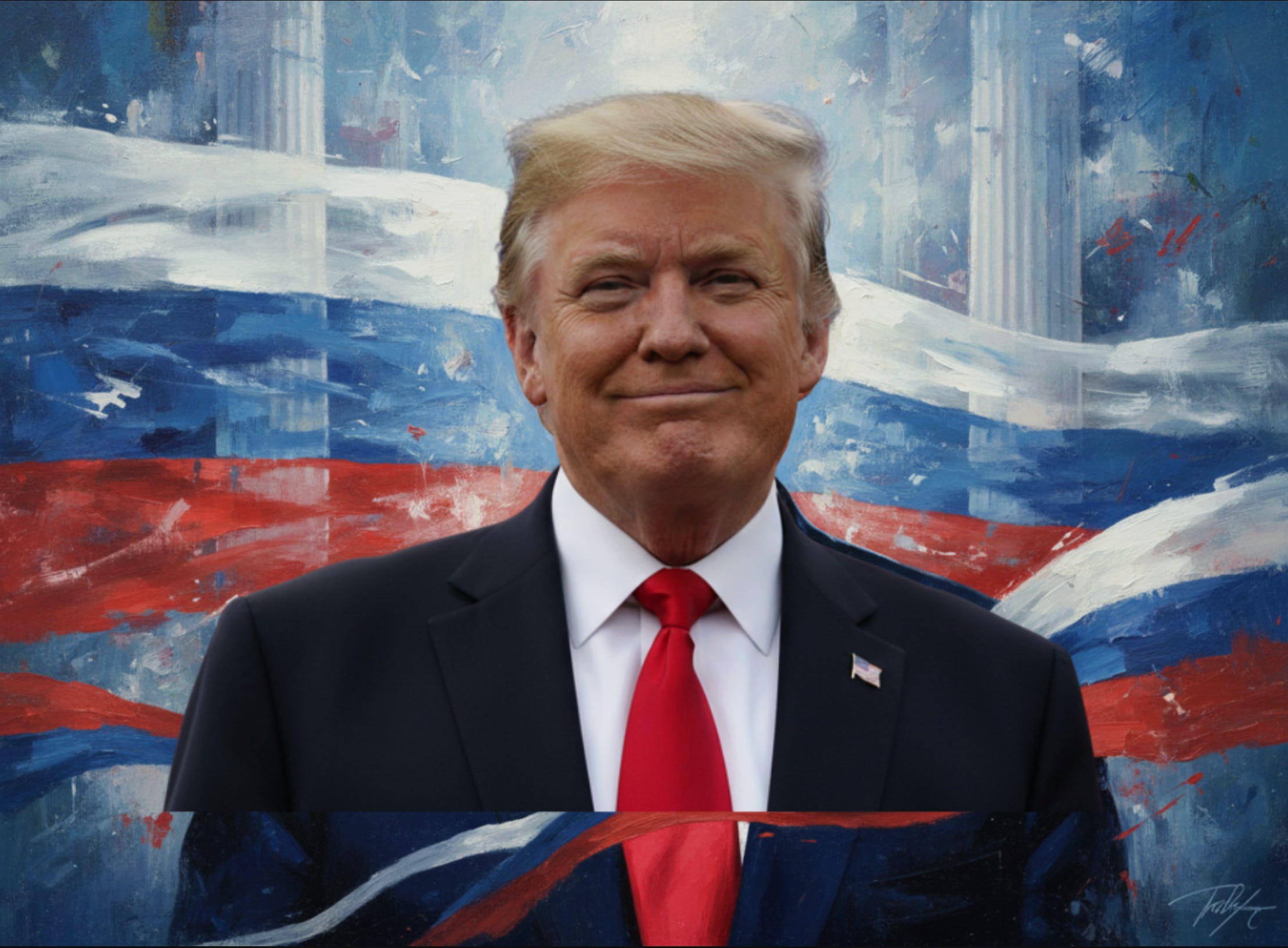
Russia: Trump The Alley - Wednesday's Edition
Trump: good or bad for the world?
The red carpet was wrong. Not the carpet itself, which was regulation crimson, the kind they roll out for state visits and heads of government. It was the context. Four F-22 Raptors parked in formation behind it, $150 million apiece, the most advanced fighter jets ever built. And walking toward them, grinning from the tarmac, a man with an International Criminal Court arrest warrant for war crimes.
Vladimir Putin hadn’t set foot on American soil in a decade. Now, Donald Trump was applauding him, then climbing into the presidential limousine, The Beast. Trump invited Putin into the vehicle, and they were seen seated together in the back seat. The Russian Foreign Ministry couldn’t post the photos fast enough.
I’ve spent enough time in places where symbols matter more than substance to recognize when someone’s won before the negotiation starts. Small gestures. Enormous consequences. The rules aren’t written down because everyone who matters already knows them.
Russia plays by rules Americans absolutely don’t understand.
Russia scores 93 out of 100 on Hofstede’s Power Distance Index, among the highest on earth. This is about how much a culture accepts unequal distribution of power. In Russia, those in power need no justification, their position is the power. Recognition from powerful equals validates leadership.
Russian scholars have a phrase for what drives their foreign policy: the conceptual triad of sovereignty, great power, and empire. The craving for great-power status, as one analysis put it, is so deeply linked to historical experience that it acts as a constant fixed point around which everything else orbits. Deny that status, and you trigger what researchers call ontological insecurity, a crisis of values, a wound to the self.
Three years of Western isolation had inflicted exactly that wound. Sanctions. Frozen assets. Diplomatic cold shoulders from every G7 leader. Putin was still in power, still waging war, but the message from the West was clear: you don’t belong at the adult table anymore.
Then came the red carpet. The Raptors. The Beast.
Trump let Putin speak first at the podium. He called the meeting a ten out of ten. He told Fox News afterward that Russia is a very big power with great soldiers. Then he said the onus was on Zelensky to make a deal.
From one cultural perspective, this was diplomacy. From another, it was surrender.
Trump pressures Ukraine, not Russia. He told Zelensky, “You’re losing.” His 28-point peace plan reads like Putin wrote it: Russia gets territory, Ukraine gets limits.
Asked about Article 5, NATO’s mutual defense guarantee, the promise that an attack on one is an attack on all, Trump said it depends on your definition. During his campaign, he told a rally he’d encourage Russia to do whatever the hell they want to members not meeting spending targets. Conditional protection. The Kremlin heard that message clearly and celebrated.
After Trump released his National Security Strategy in December, Kremlin spokesman Dmitry Peskov praised it publicly. He said it corresponded in many ways to Russia’s vision, specifically welcoming language about ending the perception of NATO as a perpetually expanding alliance. Moscow had demanded exactly this for years. Trump delivered.
But it goes deeper than bilateral summits and security documents.
The administration has thrown its weight behind far-right, pro-Russian parties across Europe. Vice President Vance met with the far righ party, Alternative for Germany leadership at the Munich Security Conference and endorsed them. Trump posted “FREE MARINE LE PEN” after her conviction in France. Elon Musk urged Germans to vote to support AfD. Similarly, backing for pro-Russian candidates in Romania and Poland.
These parties share common ground with Moscow. Nearly all refused to condemn Russia’s invasion. Nearly all expressed reluctance to support Ukraine. Nearly all align with Russian foreign policy positions. The strategic logic is clear: a divided, weaker Europe is open to Russian expansion.
In Hornby’s psychological archetypes, Putin combines what researchers call North and Blue. North is the power-seeker. Ambitious, determined to lead, rejecting others’ opinions unless they serve his agenda. Blue is the guardian. Inner certainty about what’s right, authority without introspection, insistence on traditional ways. Together they produce an authoritarian who seeks dominance while positioning himself as defender of Russian civilization against Western decadence.
I don’t think Trump wakes up asking how he can serve Putin. That’s not the point. The point is that from Moscow’s cultural perspective, he delivers exactly what a high power distance system requires: recognition, status, and respect from a powerful equal.
Putin waited years in isolation.
Trump ended that wait with a red carpet, a photo op, and a ride in the Beast.
Maria Zakharova, the Russian Foreign Ministry spokesperson, posted, “For three years they have been talking about Russia’s isolation, and today they saw the red carpet that greeted the Russian president in the United States.”
I know what a red carpet means in a culture that reads power through symbols.
The alliance has been confirmed.


