How The Big Three Power's Currencies Work. The Dollar And Why The World Holds It. Monday’s Edition.
The Long Chain: The Dollar, The Yuan, And The Ruble. Series 37 #1
For most of history, the world’s great powers ran their currencies the same way. Spain and Portugal looted gold and silver from the Americas and minted it into coins. Their money was the metal itself. In the next epoch, Britain and France built their economies on trade, manufacturing, and finance, and issued paper money that could be exchanged for gold or silver. In both systems, the metal was the anchor, setting a hard limit on redemption and leaving less control over how the currency functioned. (China used paper money not redeemable for gold or silver under the Song, Yuan, and Ming, starting in the 11th century)
Today the major powers all run a fiat currency that holds value only because people accept it. That gives the government a great deal of control over how the currencies work. The U.S., China, and Russia each run their currencies differently, and that difference determines their power.
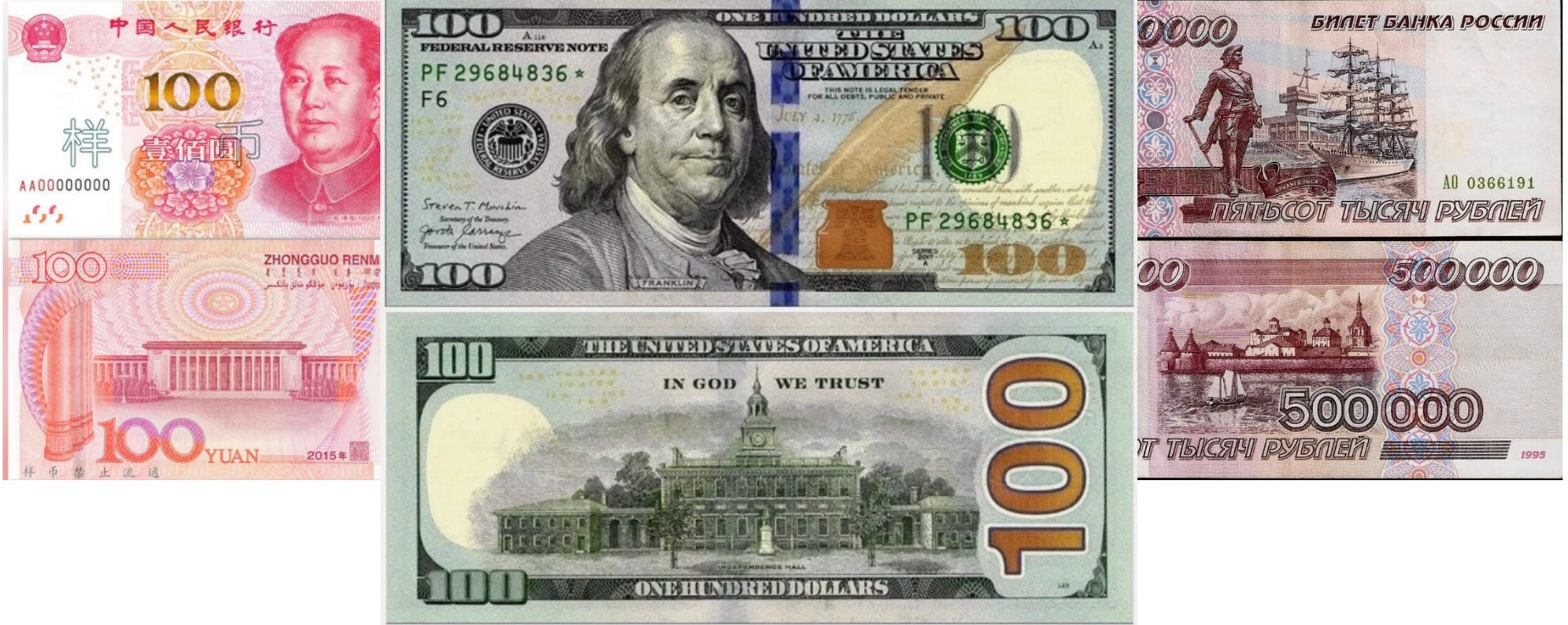
How the U.S. dollar, the Chinese yuan, and the Russian ruble operate reflects different cultural perspectives on how to manage their currencies and what a currency is for. The dollar is trusted and moves freely. The yuan moves only under strict government limits. The ruble keeps its value only because strict government rules stop it from falling. Across three editions, we look at how each one works. This edition is about the dollar, because the other two are measured against it.
Anyone can move the dollar into and out of the United States with little restriction. American courts will enforce the written contract between any two parties. The cultural researchers Kwok Leung and Dov Cohen call the United States a Dignity culture, which means a person's worth and rights are treated as something they hold inside themselves, equal to everyone else's, so disputes are settled by written law and impartial courts rather than by status or relationship. The anthropologist Edward Hall adds that the United States is a Low-context culture, which means the full agreement is written in the contract itself, not carried in the relationship between the two sides, so a court makes its decision based on the wording of the contract, not the parties involved. That is why an American court treats a foreigner's claim the same as a citizen's, and why an investor in Singapore who buys United States government debt trusts that the loan will be repaid. That confidence is why the world keeps its savings in dollars.
In the first quarter of 2026, central banks held about 57 percent of their foreign reserves in dollars. The euro was the second most held currency at 20 percent. The Japanese yen held about 5.4 percent, the British pound about 4.5 percent, and the Chinese yuan about 2 percent. No other currency comes close to the U.S. dollar. So when a company in Brazil buys parts from a company in Thailand, the two settle the deal in dollars rather than in their own money, because both trust the dollar.
The dollar floats; buyers and sellers in the open market set its price, not the government. It is fully convertible; anyone holding dollars can sell them for another currency without requiring authorization. The United States also has the deepest market for government debt in the world, where investors lend money to the government by buying its bonds. Daily Treasury cash trading runs around $900 billion. On the largest electronic bond platform, US government bonds trade about three and a half times the volume of all European government bonds combined.
The Federal Reserve, the American central bank, manages the dollar. By law, the president cannot order it to print money or set interest rates. That independence is itself a cultural perspective in which the law outranks the country’s leader. Investors trust the dollar in part because no single leader can weaken it by printing money to pay the government’s bills.
The world trusts the dollar because American rules apply equally to everyone. That trust weakens each time the United States blocks a country's access to the dollar to punish it. When the United States sanctioned Russia's two largest oil companies, Rosneft and Lukoil, in October 2025, China's four state oil companies stopped buying seaborne Russian crude the next day. Indian refiners followed by December. Neither country wanted less Russian oil. They stopped because handling a sanctioned company's cargo could cost them access to the dollar, and no refinery can operate without it. Within months, both were buying the same oil again through new companies Russia created to keep its name off the paperwork.
The lesson every country took away was clear: the dollar is open to everyone, until the United States decides to shut a country out.
The dollar works because of the
cultural perspective built on Dignity and Low-context
courts that enforce the rules the same way for everyone
it moves freely
The central bank operates independently of the president.
That combination is why most of the world’s reserves are held in dollars, and why one American sanctions order paused direct purchases, then resumed through intermediaries.
Wednesday’s Edition covers the two challengers, the Chinese yuan and the Russian ruble, and why each government gave up the free movement of money that gives the dollar its power.
If you enjoyed this article, help support my work by becoming a paid subscriber or “Buy me a coffee.”
Get a solid understanding of Trompenaars’ cultural dimensions by purchasing the guide or subscribing to Cultural Perspective (free or paid) and receiving the guide for free.


