China's Game: The Parallel Global Financial System. Friday's Edition
How China Is Winning And Will Win The World. Series 21 #5
Just as the U.S. built a parallel global financial system to replace Britain’s, so is China building one to replace the U.S. system. The third step in creating a new global reserve currency is less obvious than developing a creditor network and accumulating gold; it is the infrastructure that makes the new system work. China has been developing this since 2012.
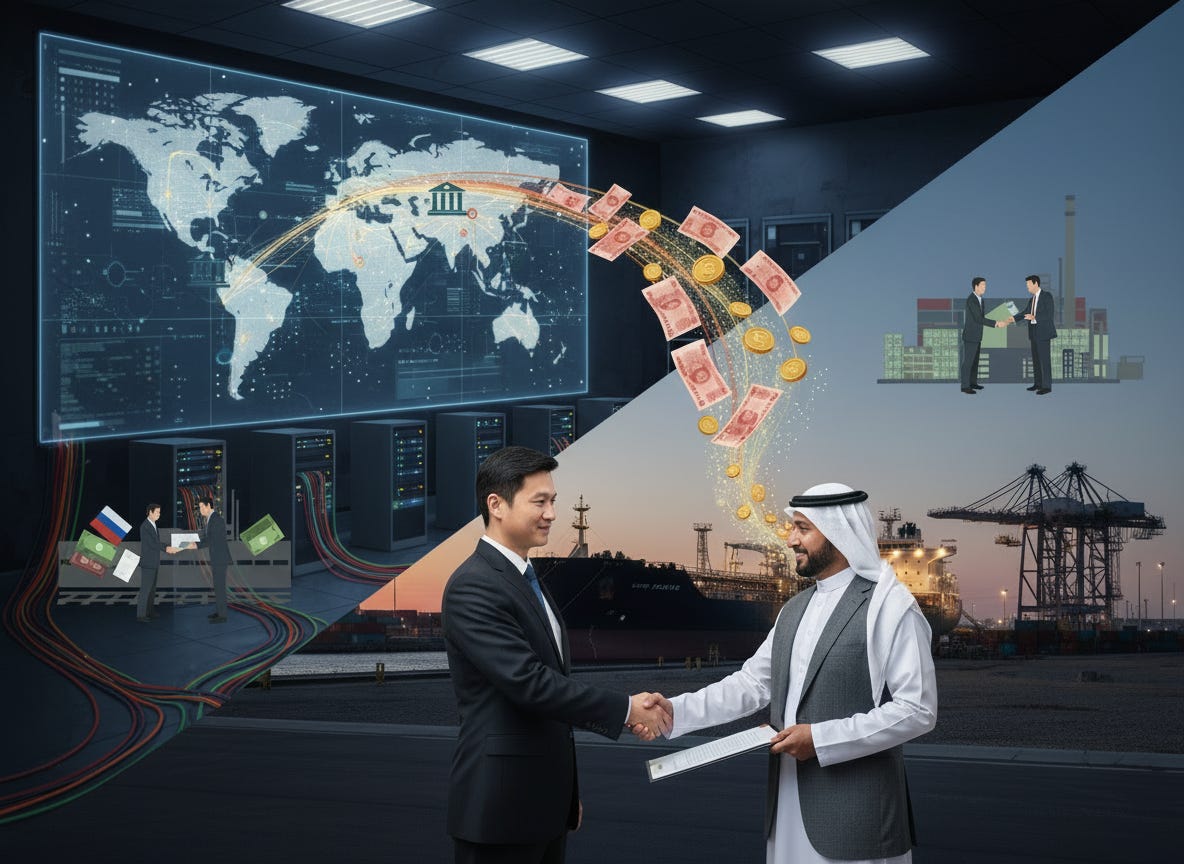
China began building the Cross-Border Interbank Payment System (CIPS) in 2012 as an alternative to SWIFT, the Belgium-based network that coordinates virtually every international bank transfer on earth. This gives the controlling nation real power. A country excluded from SWIFT cannot pay for imports or receive payment for exports. It is economically strangled.
Before 2012, CIPS did not exist; today, it connects 1,683 financial institutions across more than 120 countries. CIPS is not a replacement for SWIFT, but it is a functioning parallel system that grows every year, and every institution that joins reduces its dependence on the Western-controlled SWIFT system. It is China’s foot in the door for controlling global trade.
The second component is yuan-denominated trade. In 2023, Saudi Arabia, the world’s largest oil exporter, signed a currency swap agreement with China and signaled openness to yuan settlement. This is important because it undermines the petrodollar system. A system established in the 1970s when Saudi Arabia agreed to price oil exclusively in dollars. The petrodollar has been the backbone of the dollar's reserve currency status for 50 years. Every nation that imports oil needs dollars to buy it, which means every nation on earth holds dollar reserves. Saudi Arabia's acceptance of the yuan is not insignificant. Russia now settles the majority of its trade with China in yuan and rubles. India is looking at rupee-based trade with multiple partners. This is Trompenaars’ external direction operating at a geopolitical scale: China has not confronted the petrodollar system; it has created opportunities to move away from it as those opportunities develop.
The third component is the BRICS payment system. Brazil, Russia, India, China, South Africa, Egypt, Indonesia, the UAE, Iran, and Ethiopia account for over 40% (PPP) of global GDP. The bloc is developing the Unit, a common settlement currency, to reduce dependence on the dollar in intra-BRICS trade. China is the dominant economic force within BRICS, and the bloc's expansion and de-dollarization push create an environment that directly benefits China's strategy. The developing world seeking alternatives to the dollar is the condition China is building toward.
CIPS is the infrastructure: it moves yuan across borders without using the dollar system. Yuan trade agreements with Saudi Arabia, Russia, and India build the transaction volume to function as a credible system. The more it grows, the more financial institutions have a reason to connect to it. BRICS gives the political weight that could one day make the system the default for the developing world. This is Hofstede’s long-term orientation and Trompenaars’ external direction working together: China has not declared a plan to replace the dollar, but it has built the conditions that make replacement possible.
When the U.S. was orchestrating the replacement of the pound sterling, it took four decades. China is moving faster. China needs only to wait for the U.S. to significantly weaken, the final step before proposing the yuan as an alternative. America is close, a $38 trillion debt, growing at over 6% annually, a tax cut for the richest corporations and Americans with no way to pay for it, an economic policy resulting in both job losses and higher prices, and now a war with Iran costing more than a billion dollars daily. China will not have to wait long.
Saturday’s Core Brief presents the full picture: where China stands across all five steps right now and what the trajectory data suggest about when the balance of financial power shifts decisively.
Sidebar: The Petrodollar
In 1974, US Secretary of State Henry Kissinger negotiated a deal with Saudi Arabia: America would provide military protection and weapons sales, and Saudi Arabia would price oil exclusively in dollars and invest its surplus revenues in US Treasury bonds. The arrangement locked dollar demand into every oil transaction on earth and recycled petrodollars back into American debt markets. It was one of the most consequential financial agreements of the 20th century and it is not a treaty it is an agreement. China’s yuan oil payments to Saudi Arabia are a direct challenge to the architecture Kissinger built 50 years ago.
If you enjoyed this article, help support my work by becoming a paid subscriber or “buy me a coffee.”


